Better known as a challenging urban bream fishery, the lower Yarra River is home to both resident and seasonal populations of snapper. Brent Hodges explains.
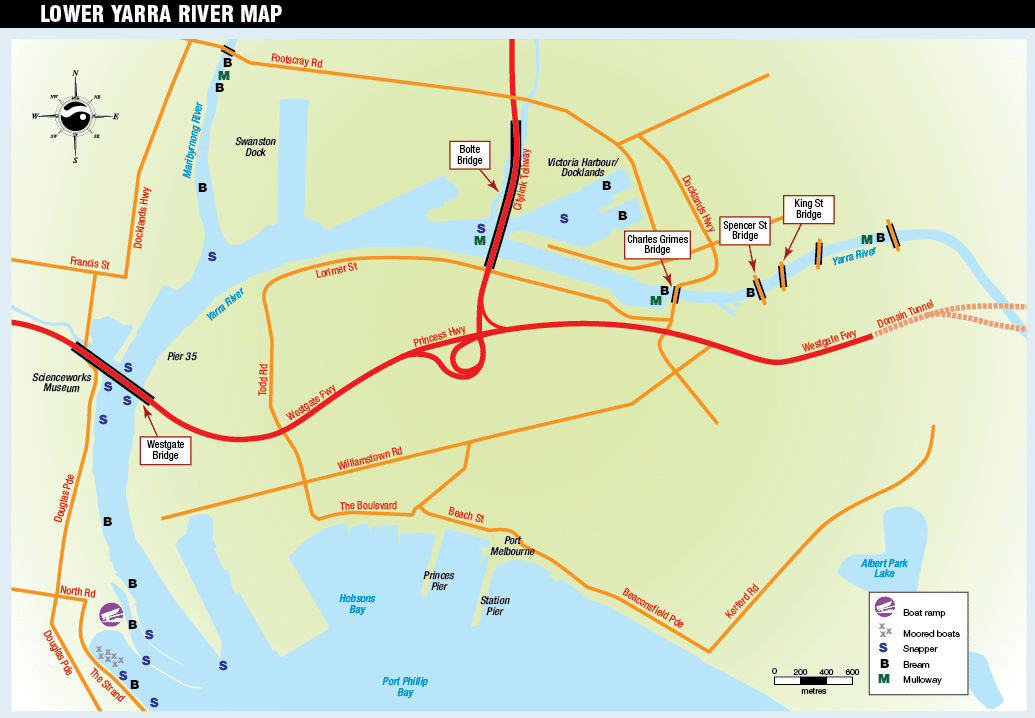
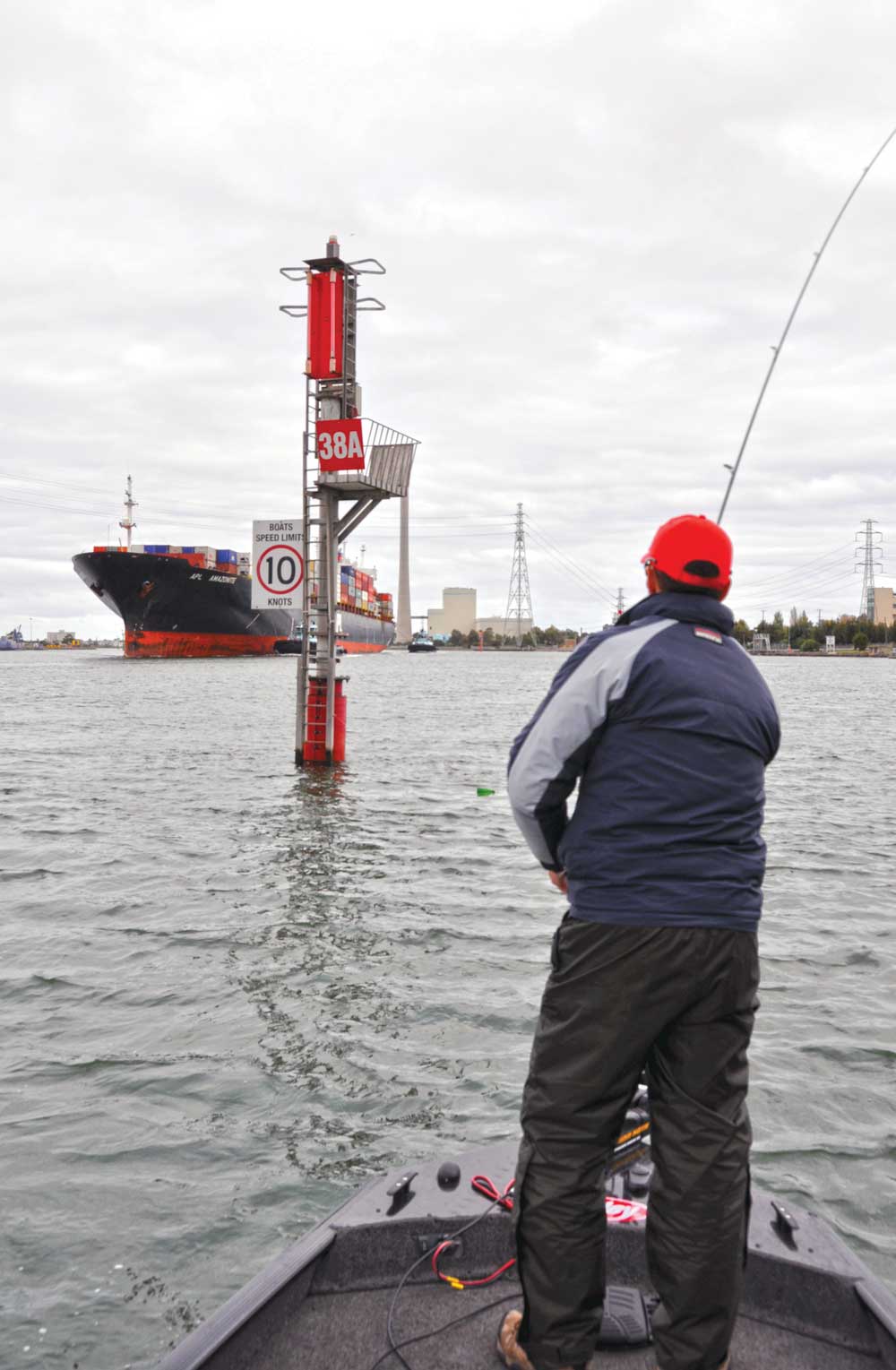
Winding its way through metropolitan Melbourne, the lower Yarra River can be a hectic and somewhat unusual place to spend a day on the water. Imagine being flanked by billowing chimney stacks, fuel refineries, power stations, factories, huge cranes and thousands of passing cars and trucks. Now factor in a steady stream of boat traffic in the form of colossal container ships, tug boats, passenger ferries, party vessels, expensive yachts and cruisers, and you’re there!
Capping off a long list of deterrents, city stormwater run-off and easily eroded clay soil sediment of the catchment further upstream, ensure the Yarra remains murky and discoloured for much of the year. Hardly the stuff dreams are made of, is it? Though unlikely to get the juices flowing from an aesthetic perspective, the lower Yarra River is a unique and intriguing urban fishery, capable of producing some entertaining sport. Admittedly, it’s not the most attractive or inviting location and it may take some time to acclimatise. Simply driving your boat under the West Gate Bridge or alongside a passing container ship is a surreal and eerie experience. What will really blow your mind, however, is hooking up to a river run red within earshot of a roaring crowd at Etihad stadium! Yep, snapper at Docklands, who would’ve thought?
 River Run Reds
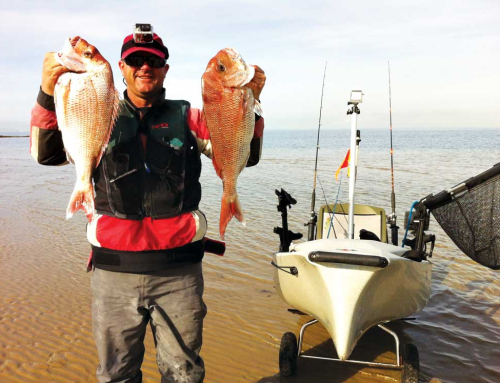
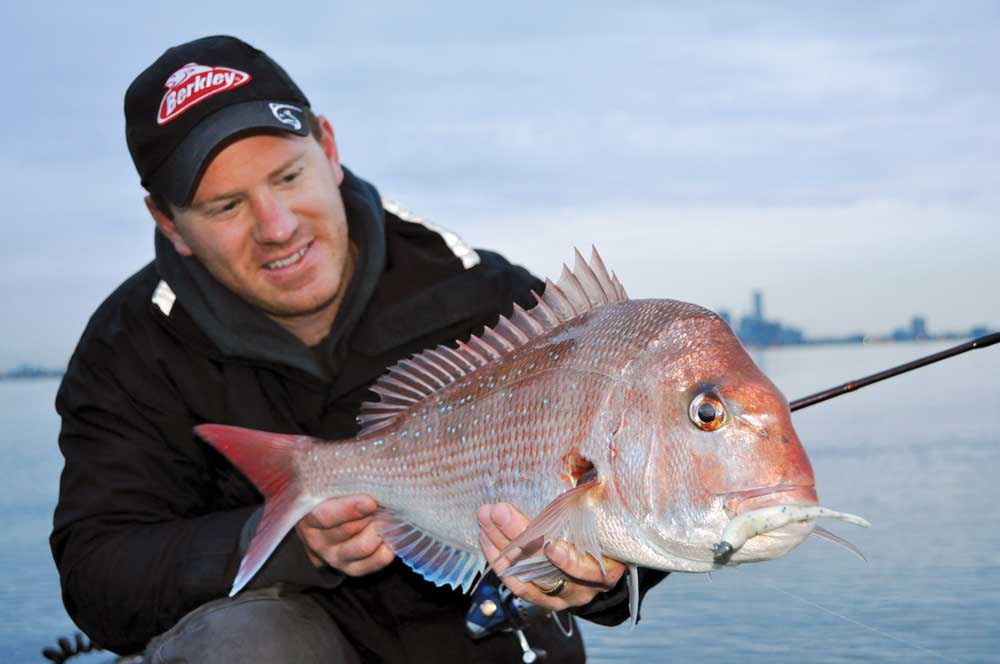
Believe it or not, lurking in the shadows of the city skyline, a thriving population of spirited pinkie snapper offer year-round action right in the heart of Australia’s busiest port. Most range in size from barely legal up to about 55 cm or 2 kg in weight, with the odd 3 to 4 kg red making an occasional appearance. Until about six years ago, I’d never contemplated targeting snapper in the Yarra River. That all changed, however, when a solid river run red took off with my soft plastic just downstream from the West Gate Bridge. Initially, my brother stumbled across the existence of these fish when he was waved down by a landbased bait angler whose rod suddenly shot off the jetty. As it turned out, the culprit was just one of several snapper encountered by the gentleman for the morning. Making a quick change, from a hardbodied bream lure to a worm pattern soft plastic, Brad went on to land half a dozen reds to three kilograms within the next hour. While initially locating these fish clearly involved an element of luck, we’ve both dedicated many hours to pursuing them since.
Minnow pattern soft plastics are well worth a shot, especially on the inshore reefs at the mouth of the system or whenever baitfish schools are present.
Snapper for all Seasons
The arrival of huge schools of whitebait and yellow-eye mullet in the lower reaches of the system kicks the migration process into gear during late summer and early autumn. Australian salmon and sometimes tailor push the bait further upstream. Larger predators, including snapper and mulloway, follow intently and help themselves from below. As the baitfish schools gradually disperse, many snapper undoubtedly leave the system shortly after entering. Some come and go with the tides, while others remain in the river year-round. These fish generally hold close to various forms of man-made structure south of the central business district. Jetty pylons, channel markers, yacht moorings and any other areas that house extensive marine growth, such as tube worms, mussels and barnacles, are prime locations.
Concentrating your efforts a few days either side of the full moon phase puts you in with the best chance of a larger fish, while smaller pinkies can be taken all throughout the lunar cycle. The key to hot action is to locate the fish when they’re still schooled up shortly after they arrive. Of course, there really is no way of pin-pointing exactly when this will occur, but my diary indicates the week leading up to the full moon during March and April is a good time to be on the water searching. Once they spread throughout the system they do become more difficult to find. Even so, reasonably consistent action can be expected until about mid to late July.
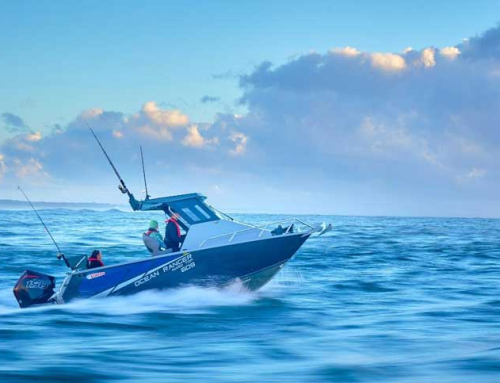
Tried and trusted target areas include the jetties and swing moorings at Williamstown, as well as the rock groynes that line the warm water outlet at Newport, especially when the power station is operating. A series of jetties and pontoons dotted along the western shoreline from the mouth through to the West Gate Bridge are popular with landbased anglers. Similarly, the passenger ferry jetty just downstream of Pier 35 on the eastern bank also provides a shore-based option. When fishing from a boat, there are limited opportunities to anchor in the lower Yarra River. Fishing in general is discouraged within the main shipping port, but anglers are permitted to drift under electric power between the channel markers and the bank, unless of course keep clear signs indicate otherwise. Anglers should familiarise themselves with the local exclusion zones and constantly keep an eye out for approaching boat traffic, especially big ships.
-

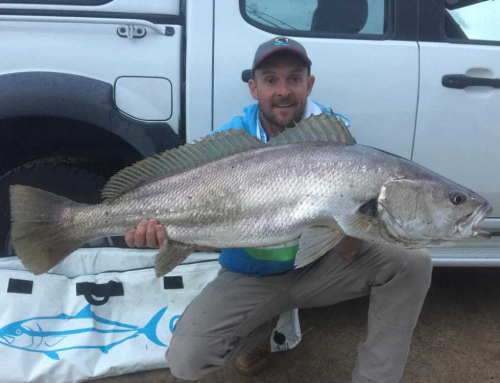
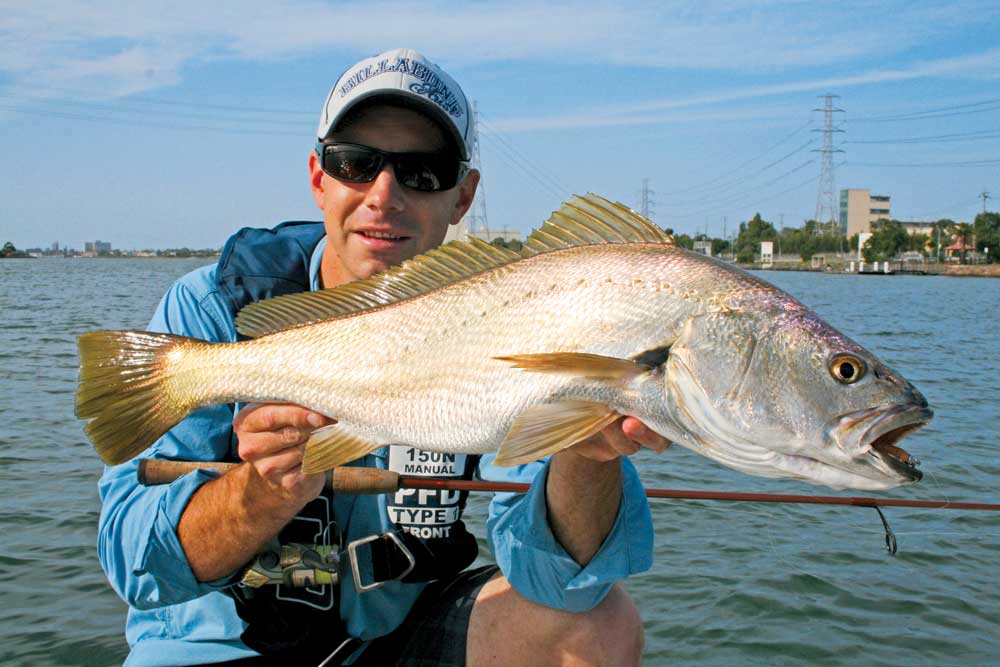
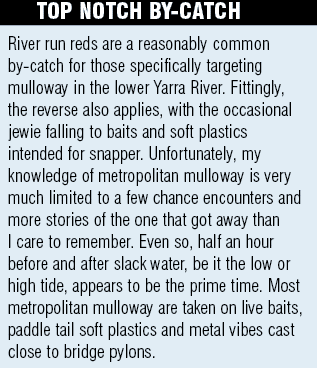
- Targeting snapper in the lower Yarra River is also likely to produce the occasional school mulloway. Not bad for by-catch!
-

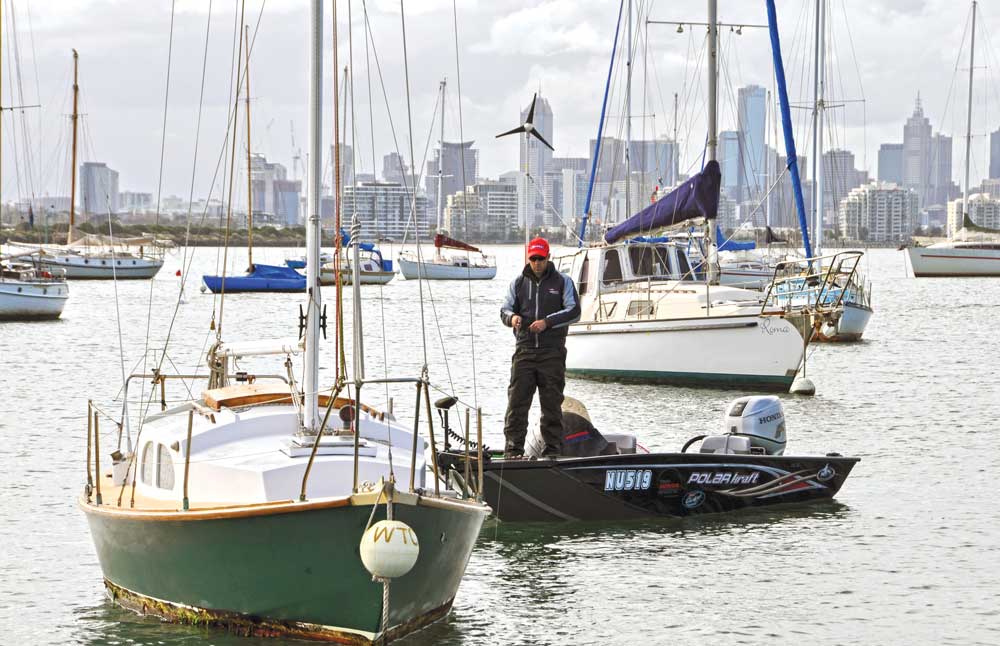
- The swing moorings at Williamstown hold both seasonal and resident populations of pinkie snapper and many of these fish respond to techniques more commonly associated with targeting bream.
-

- The lower Yarra River can be a hectic and somewhat unusual place to spend a day on the water. While prospecting likely looking structure, always keep an eye out for approaching boat traffic, especially big container ships!
The bite generally slows down during the latter stages of winter, but there are pockets of resident fish still available. The area surrounding the base of the Bolte Bridge adjacent to North Wharf is a popular location at this time of year. Somewhat surprisingly, a good run of reds also venture well up into the calm waters of Victoria Harbour. Feeding aggressively in numbers when they first arrive, these fish gradually become more selective as they mix with bream and take up residence amongst the old wooden jetties. Fishing for snapper with Etihad Stadium and some of Melbourne’s finest restaurants looming in the background is a bizarre concept, but there are some reasonable fish to be had in this area. Although it can get bitterly cold, fishing after dark can be more productive at this time of year. Moving into spring and summer, the best fishing occurs back at the mouth as new season reds turn up on the shallow inshore reefs at Williamstown and Port Melbourne.
 Tackle and Techniques
After an initial period of intense feeding activity upon entering the system, river run reds seem to take on many of the characteristics of bream and respond to similar techniques. Berkley Gulp 4 inch Turtleback Worms and 3 inch Craws rigged on 1/12 to 1/6 oz jigheads have accounted for most of the snapper we’ve come across over the past few years. Minnow imitations are also worth a shot, especially on the inshore reefs at the mouth of the system or whenever baitfish schools are present. I’d say roughly 60 percent of fish we’ve caught intercept the lure on the drop or as it falls through the water column after the initial cast. About 30 percent pick the plastic up while it’s lying motionless on the bottom and the other 10 percent are encouraged to strike mid-way through the retrieve. I guess this highlights the effectiveness of scented soft plastics. These days I spend far less time working the lure back to the boat and more time peppering casts at likely looking structure. An ability to read the water and work out where the fish are likely to be holding is often far more important than crafty retrieve patterns. Boat position is crucial and I generally prefer to point the bow mounted electric motor into the current and work the plastic back with the tide. Casting accuracy also plays an important role in terms of the number of fish you are likely to encounter. The general aim is to imitate bits of barnacle and other marine creatures falling off the structure after being dislodged by fish feeding higher in the water column.
A 3 to 5 kg spinning rod, 3000 size threadline reel, 6 lb mainline and 8 to 10 lb leader will help you land more casts closer to the mark. As soon as the lure hits the water, engage the reel, watch the line carefully and strike at any sign of a hit. After setting the hook, try to get the jump on the fish as quickly as possible. Those who have only ever caught snapper in deep open water environments will be surprised by the brutal power and structure oriented nature of river run reds. When you do inevitably find yourself hooked up on the wrong side of a jetty pylon, channel marker or mooring chain, don’t be afraid to put the reel into free spool before the line comes into contact with the structure. Under load, razor sharp barnacles slice through thin braid like cotton. Occasionally you get cleaned up before there’s even time to react, but releasing the pressure and carefully attempting to unravel the line at least gives you a chance. If successful, continue to work the surrounding area thoroughly as there’s likely to be a few fish schooling in the nearby vicinity. If not, make up to half a dozen casts at a particular feature and move on until you find them.
Small diving lures intended for bream also account for some unexpected pinkies under the boat hulls at Williamstown. Initially, this was a bit of a novelty, but since snapper pull at least twice as hard as bream of equal weight, it can become an expensive exercise amongst the moorings. Flicking lightly weighted soft plastics is far more economical and generally much more productive anyhow. While working your way through the yachts, make a few casts at the nearby jetty pylons and protective washboards, particularly after a strong onshore blow. For those who prefer to fish with bait, pinkie snapper are a common catch on fresh mussel presented close to structure, while oily flesh baits such as striped tuna fillets or pilchards tend to be more consistent in open water. Local mulloway experts fishing with live mullet also encounter reasonable numbers of larger snapper, some of which are taken well up-river, several kilometres from the mouth.
 Snapper in the City
Over the coming months, Port Phillip Bay will be inundated with anglers searching for new season snapper. By all means, get out there and snare a few at every opportunity, but when conditions take a turn for the worse and the bay becomes too rough for safe boating, perhaps consider having a crack at Melbourne’s river run reds. Fishing within close proximity to a major city may have its detractions, but it’s certainly better than not being on the water at all! Besides, once you find yourself hooked up and line starts peeling off your spool, you’ll never know the difference.