Switched on anglers are constantly honing new skills and techniques to target a particular species. We all know that catching snapper on soft plastics is effective but Michael Starkey and Jay Morgan are pushing the boundaries further and looking to hardbody lures to get the job done. Nigel Webster reviews this innovative technique.
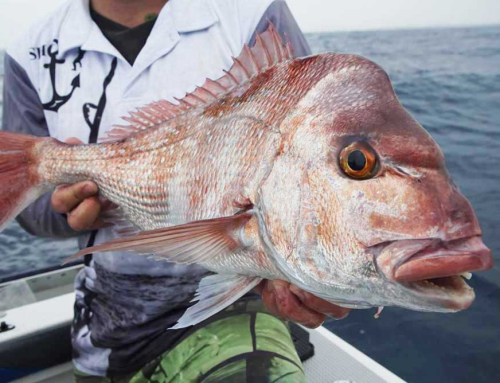
Snapper are opportunistic feeders. They often hover in groups throughout various water column depths and set upon any apparent food supply that comes within range. Targeting these fish with soft plastic lures has taught us much about their predatory habits. Snapper love baitfish profiles slowly sinking through the water column; it therefore makes perfect sense that they will also eat a hardbody lure that imitates a dying baitfish descending towards the bottom. The rapid growth of the hardbody market within Australia has provided plenty of options that make for great snapper lures. The Frogleys stable boasts some high-quality Japanese lures and some of these have made a name for themselves in the bream and bass tournament circuits. Lately however, some of the sinking models are proving dynamite on offshore and bay species such as snapper. Through working with Michael and Jay on a recent episode of Sport Fish DVD I got to see first-hand how these anglers are taking some impressive snapper catches.
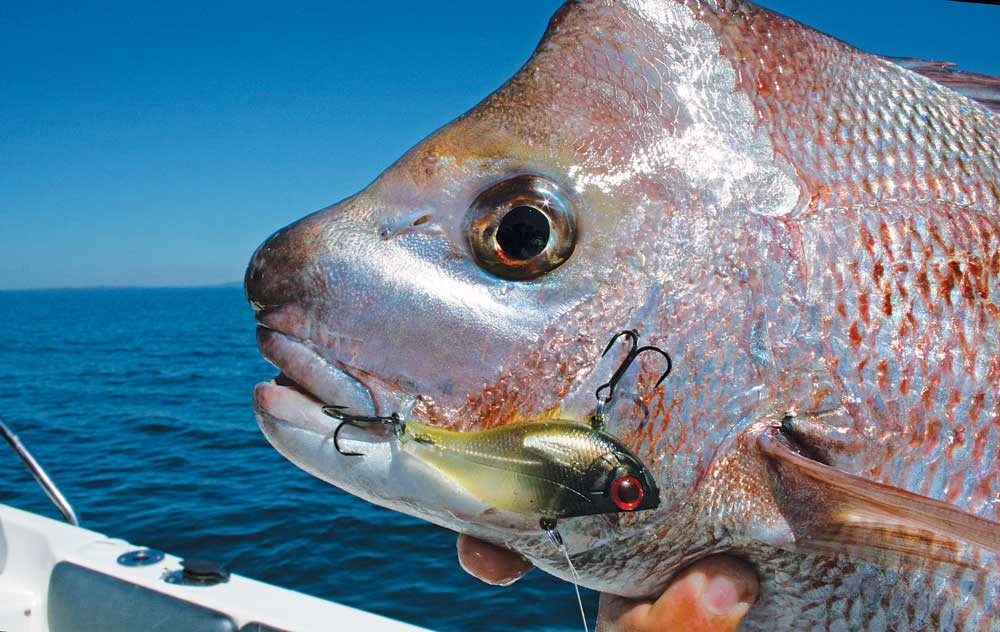
Hardbody lures such as the Megabass Vib-X Smatra do a
great job of imitating injured baitfish; something that
snapper cannot resist.
The Small Sinking Hardbody Effect
It is always interesting to find out why certain lures works well. The discovery often empowers you to use a specific type of lure more effectively, being that you maximise its presentation when on the water. I learned long ago how effective subtle sinking presentations can be on snapper. Learning how to slow down a sinking presentation was often the key ingredient to catching quality fish in 10 to 100 m of water. Talking with Michael and Jay quickly reinforced that the effectiveness of their approach has much to do with lure attributes and the ability to present slowly. The vibration bait and stickbait model lures they use range between 55 to 65 mm and 7 to 10 grams. It surprises many when told, but it is relatively easy to get lures this weight down to offshore water depths of 10 to 40 metres. The effect of water pressure slows the descent of such lures as they penetrate deeper waters but this only adds to the effect of the presentation. Large snapper are often cautious feeders, but few will reject a small bite-sized and realistic baitfish replica slowly drifting through their zone of influence.
Tackle
Fishing lighter and smaller presentations often requires rods, lines and reels to be sized down accordingly. The Frogleys crew select equipment that many would perceive to be too light to tackle larger snapper. Michael suggests that only a handful of fish have been lost to the reef in recent seasons. Many fish run considerable distances before tiring, but they rarely head towards the low-lying reef. Typical outfits include Samurai and Megabass rods in the 6 to 12 lb and 10 to 17lb ranges.
Megabass Renilii and Luvito reels are loaded with 10 to 14 lb Unitika braid and matched with two to four metres of Unitika Aiger fluorocarbon in 11 to 14 lb weighting. Fine diameter braid will assist the presentation of smaller lures in deeper water as it reduces the amount of water pressure sustained on the line. Rods with sensitive tip sections combined with lower-end butt power will promote the finesse presentation required when targeting fish using these lure types.
 Winter Options
Michael and Jay spend much of their time targeting snapper around Ballina and the northern and central New South Wales coast. The cooler months typically see good numbers of snapper moving in to shallower waters. Patches of gravel and the occasional bommie and larger reef system in 10 to 40 m of water will all attract snapper. Using a reliable charting package and sounder will quickly help identify likely looking country. This part of the coastline is full of great looking structure so it shouldn’t take you long to find productive fishing grounds. Signs of bait shows on the sounder and visible surface signs of current lines should not be ignored as areas worth prospecting with a drift or two.
Hardbody Drifting
Drifting is an effective approach to targeting snapper using sinking hardbody lures. A mobile approach promotes the presentation of these lure types and also enables an angler to cover more ground. Snapper and bait schools are typically mobile. Staying in one location waiting for them to come to you is often sub-optimal to being active and hunting them down! This means weather conditions play a part when developing a plan of attack. Calm days with minimal wind makes life a bit tough as hard as that may sound! A little breeze certainly helps to push the boat around and work those lures across larger amounts of reef country. A sounder that shows track lines is always a useful tool when drift fishing. The ability to reproduce a precise drift is important once you are finding that fish are feeding in an area. Having discovered a likely looking area to fish, position the boat so that it will drift through and thoroughly cover as much of that area in a single drift.
Technique
A two tiered approach can be used when fishing sinking hardbody techniques. Michael and Jay prescribed to passive and active techniques fished simultaneously when out on the water. When using sinking hardbodies on snapper, most bites occur during the drop. The techniques that these anglers use are strongly geared towards this important consideration.
The Passive Retrieve
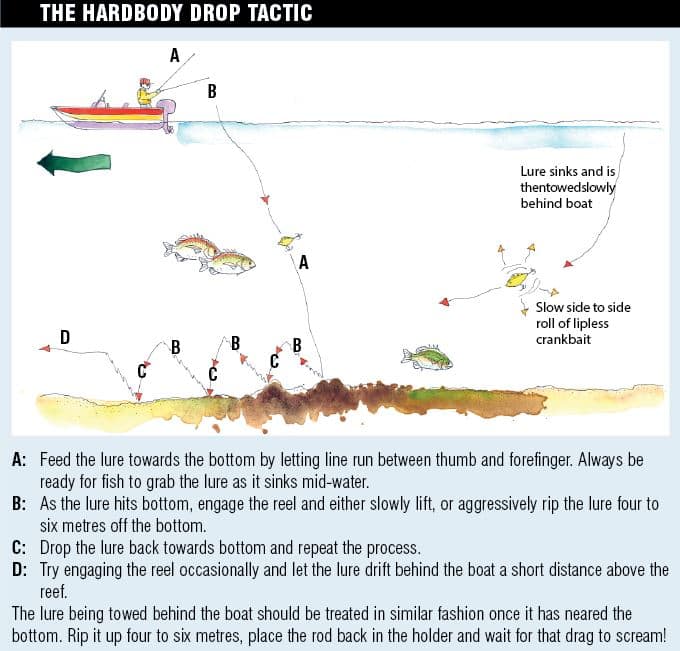
The passive approach involves using the rod holders in the boat. At the commencement of a drift, cast a lure as far back from the boat as possible, engage the reel and set the rod in the rod holder. Do not forget to set the drag to strike mode. The drift of the boat will slowly tow the lure as it sinks towards bottom. Consider a really slow troll that allows a lure to sink towards the bottom and you are getting the right picture. A casual glance at the rod tip and angle of the line will indicate how the lure is performing and what depth it is sitting in the water. As the lure reaches or nears the bottom it needs to be kicked into life again. At this point Michael and Jay pick the rod up and aggressively rip the lure four to six metres up in the water column. The rod is then re-placed in the holder and left to do its thing. The slowly drifting lure and the seductive side-to-side body roll that it promotes make it an effective method. A bite will register loud and clear as you are left with a buckled rod and screaming reel. The beauty of the passive approach is that it enables you to fish more lures. This means you are able to experiment with different lure choices and colours on any given day.
The Active Retrieve
The active retrieve involves manually working a rod and line. As the boat commences drifting, you can cast the lure behind the boat and replicate the passive retrieve. Alternatively, a lure can be flicked a short distance behind the boat and slowly released towards the bottom. Allow the braided line to feed between the thumb and forefinger; these fingers can be used to control the descent of the lure and detect if a fish grabs the lure as it descends. Having detected that the lure has hit the bottom, either slowly lift the lure four to six metres off the bottom, or aggressively rip it upwards. The activity levels of the fish on any given day will dictate which option will work best. Then, once again, slowly drop the lure towards bottom. A variation to this retrieve involves lifting the lure a short distance off the bottom, engaging the reel and allowing the lure to be towed behind the boat for a distance.
The Hard Facts
More snapper will be caught on hardbody lures. The more we used soft plastic lures the better we became at learning how to catch lots of them. I firmly believe the same will be true with hardbodies and snapper. The variety of lures we have on our shelves today makes it easy to select some to carry out a specific purpose. I look forward to watching the development of the hardbody snapper scene. With anglers like Michael Starkey and Jay Morgan on the water it is bound to turn some interesting corners.