Trolling is an extremely effective way of covering ground, locating fish and putting a lure in front of their face. It is also a proven technique when targeting a wide range of species, including bass, barramundi, mulloway, cod and snapper, along with an ideal target for beginners and still one of my favourite target species, the humble flathead. Justin Willmer explains.
Some purists will try and convince you that there is no skill in trolling, claiming you ‘just drag a lure around’. After trolling and flicking lures from a kayak for more than 20 years though, I can assure you that the techniques you employ, areas you fish, lures you choose and when you put them in the water will all influence how effective your trolling sessions are on any species. Once you get things right, these flathead trolling sessions will grow from a fish or two to 20-plus flathead sessions.
Setting up for trolling
I troll from a variety of kayaks, including sit in, sit on top, pedal and paddle kayaks, so it doesn’t really matter too much what kayak you’re fishing from. A pedal kayak has the advantage of fishing hands free, while also using larger muscle groups that allow you to travel further and for longer periods without tiring. The bulk of my flathead trolling has been from paddle kayaks though and these are fine, as you’re not in a hurry and by selecting the right lures you don’t need to paddle fast. However if you plan on doing a lot of trolling, wish to troll for long distances, or travel long distances to your fishing spots, then a longer, sleeker kayak, of around 11 to 12 ft is ideal, as it will paddle quicker, more efficiently and track better.
Most fishing kayaks come fitted with flush mount rod holders behind the angler. These rod holders are useful for storing rods, along with lip grips, landing nets and other accessories. They are; however, not ideal for trolling, as the rod is difficult to access once a fish is hooked. The rod is also out of sight of the angler, making it difficult to know if a fish is hooked or if the lure has stopped swimming correctly due to fouling with weed or other debris. This fouling is generally signaled by the pulsing of the rod tip ceasing as the weed or other debris stops the lure’s swimming action. If you can’t see the rod, you won’t know it’s fouled.
Some fishing kayaks also have forward mounted flush mount rod holders. I tend to avoid using these because they are less secure than aftermarket adjustable rod holders. They also seat your reels close to the water, which is a definite no-no in the salt. One option is to use rod holder extensions, which are basically tubes that slide into the flush mount rod holder. They elevate your reels above the water and some feature a slot to lock your rod and reel into.
-
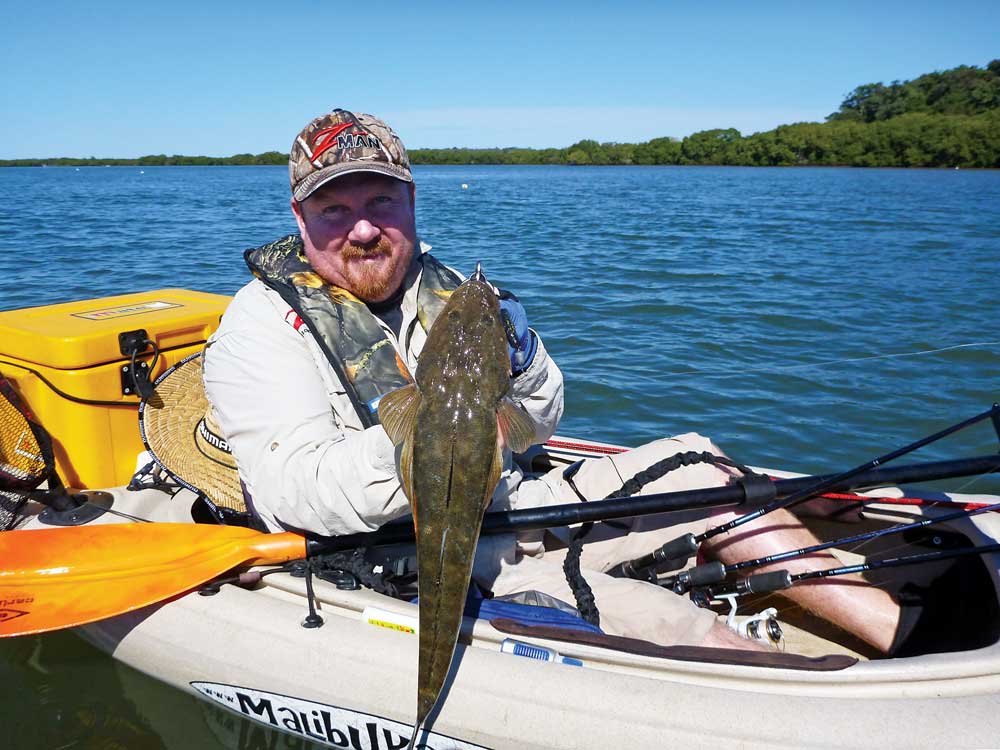
- The author trolls with one rod, but carries three rods rigged with a blade, weedless rigged soft plastic and hard body, to mix it up.
-
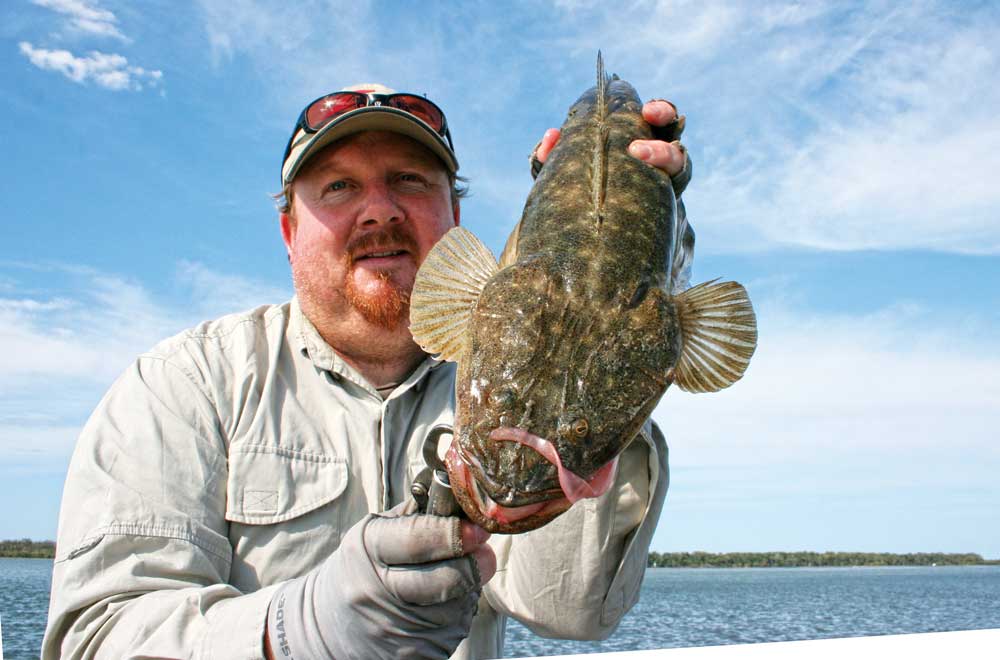
- Curly tails around 3-4 inches in length are also an effective slow trolling option.
-
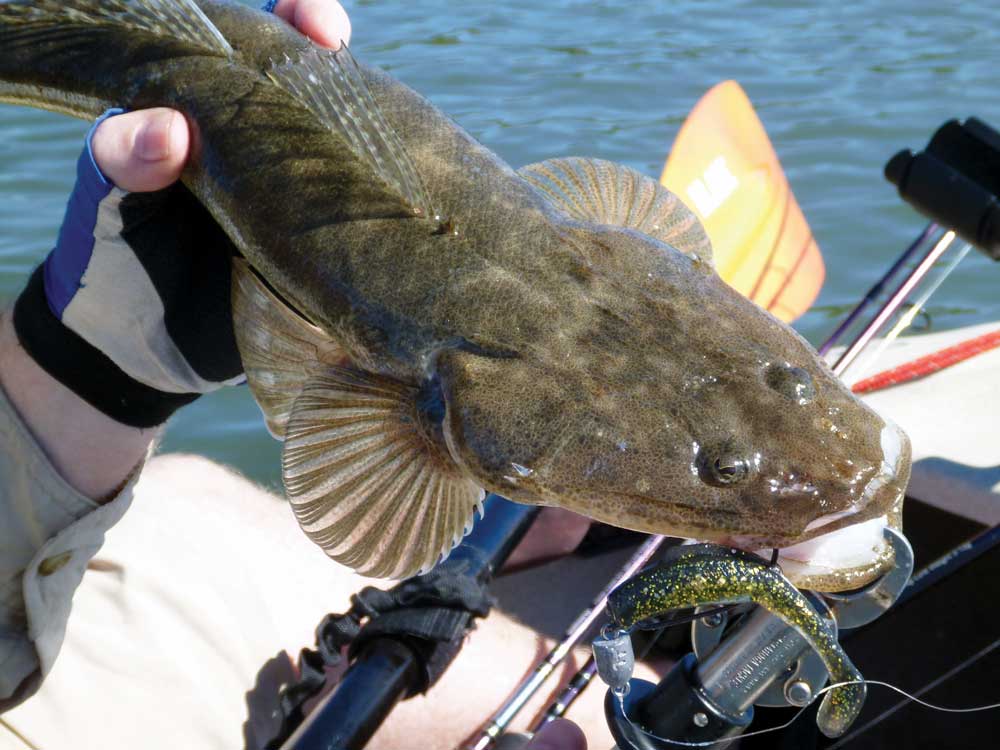
- Darker plastics like this Gold Rush 3 inch MinnowZ are perfect for dirty water and overcast days.
I find the ultimate rod holder for trolling to be an adjustable rod holder that you mount to the kayak yourself. These rod holders are detachable which makes for easy transportation. They’re also fully adjustable, allowing you to adjust the rod angle when trolling. You can also swing the rods forward – out of the way – when not trolling. When trolling, rods can be positioned so that they extend out the side and pointed slightly forward, either low to the water and beyond your paddle stroke, or elevated if they interfere with your stroke.
Before you attach the rod holders get out on the water and paddle the kayak. Look at the available space in front of you for mounting rod holders, lean forward and ensure you can reach them and that they will be clear of your paddle stroke. Some anglers I know prefer to attach a single rod holder, centred on the front of the kayak, while others prefer to mount one on each side. The design of your kayak can also dictate where the rod holders can be mounted and companies also offer accessory boards or dashboards that can be mounted to carry a sounder, GPS, rod holders and other accessories. Whatever you are mounting, remember the old saying ‘measure twice, cut or drill once’!
-
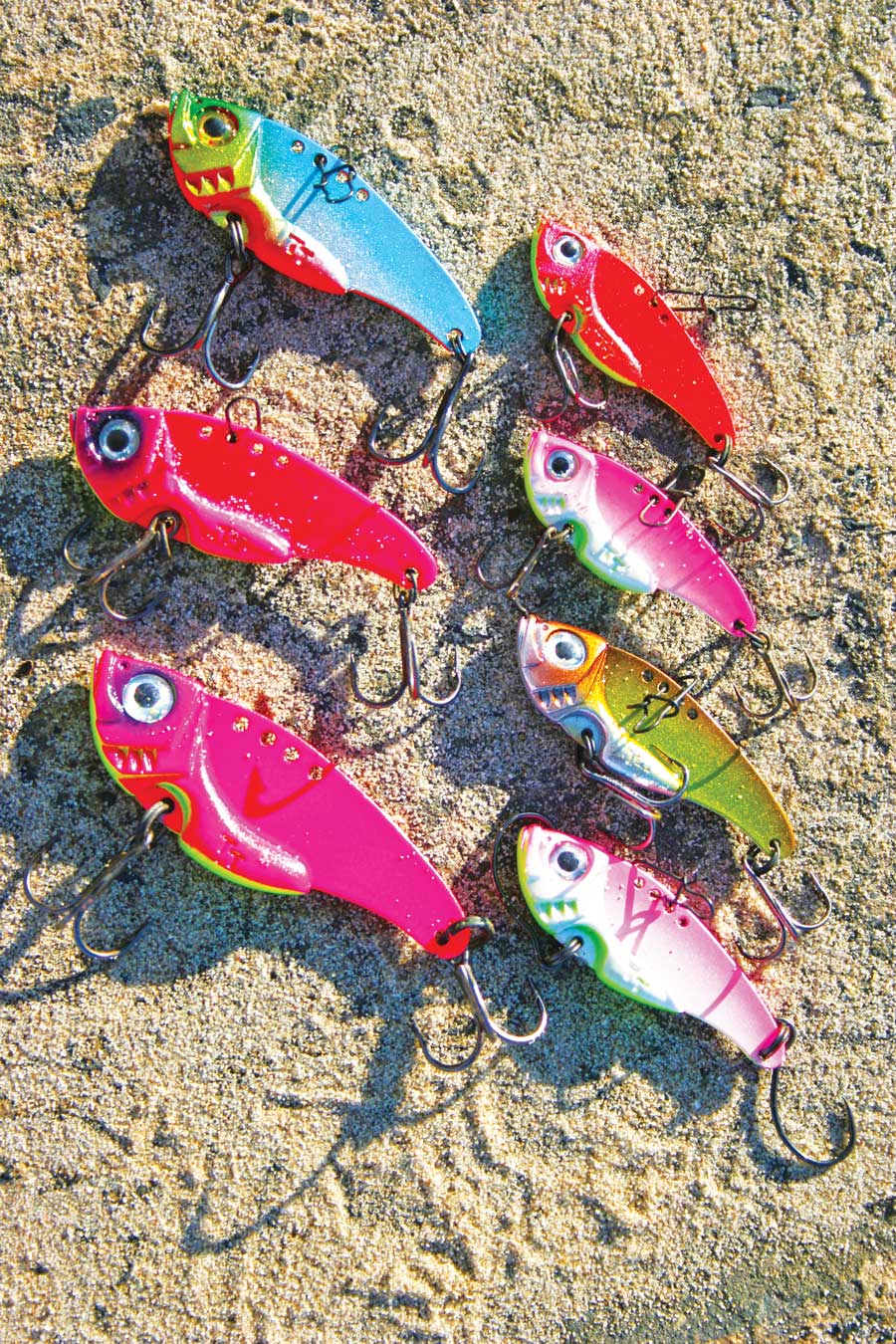
- Blades are a dynamite option for slow trolling from a kayak – plenty of action, a range of available weights and sizes, and they sink. Replacing the trebles on your blades with lure singles can reduce snagging if fishing in rough country.
-
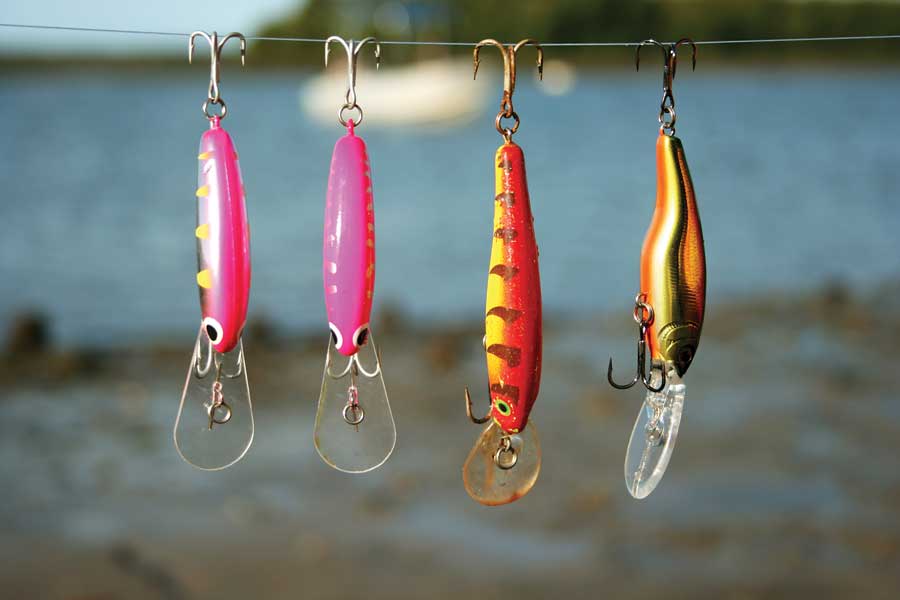
- When choosing a hard body lure ensure that the running depth matches the area you’re fishing. A few of the author’s favourites.
-
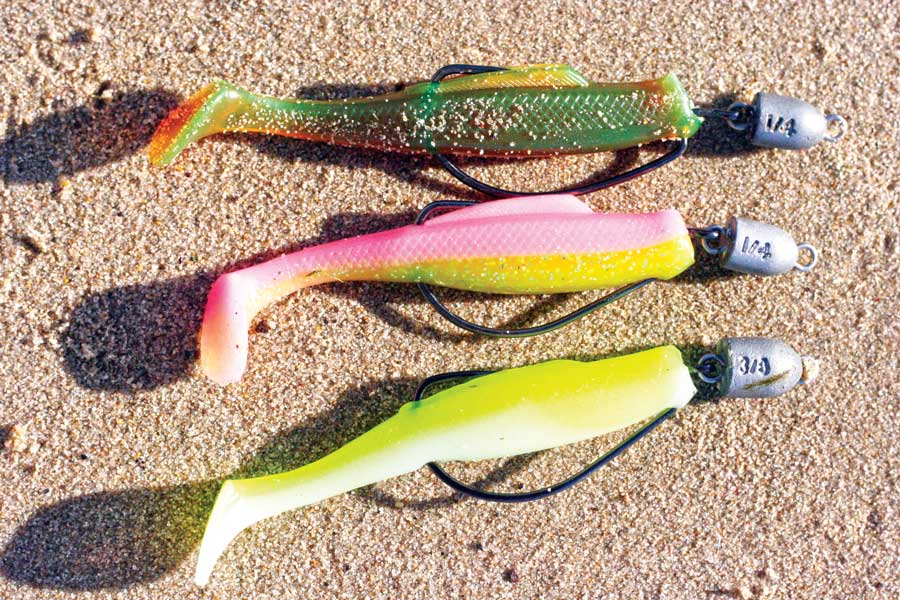
- A selection of ZMan 3 inch MinnowZ, the author’s go-to weedless rigged plastic for trolling.
Finding flathead
The great thing about flathead and more specifically the dusky flathead that I target, is that they’re often located in shallow water, across flats and around mangrove edges, making them a perfect target for anglers fishing from a kayak. Simply launch in the mouth of any of our saltwater rivers and creeks, estuary systems, or saltwater lake systems and one of the species you’re likely to come across is flathead.
When targeting flathead there are two main periods of the tide that I have found most effective for trolling. When the tide is higher, I prefer to target the last hour of the run in and first two hours of the run out. Ideal locations for trolling during the higher stages of the tide include mangrove edges, sand banks, weed beds and rubble patches. Especially target these features that are exposed at low tide. If these areas have level changes such as drains and deeper holes, even better, as flathead will move up into these hollows and position themselves in readiness to ambush unsuspecting baitfish and prawns. Water movement can also be a key, so keep an eye out for current lines and eddies that could be carrying food to the flathead. Paddling as close as possible along the mangrove edge, or systematically working troll lines to cover the flats, should see you hooked up.
The other stage of the tide, and probably my favourite time to target flathead, is the last two hours of the run out and first hour of the run in. At this stage of the tide flathead will concentrate along the channel edges, the edges of sand and weed banks, and in the mouths of drains, laying in wait as the last of the receding water brings with it a concentration of baitfish and prawns. By paddling or pedaling your kayak along these drop-offs, with a lure or two in tow, you’re sure to encounter a few fish.
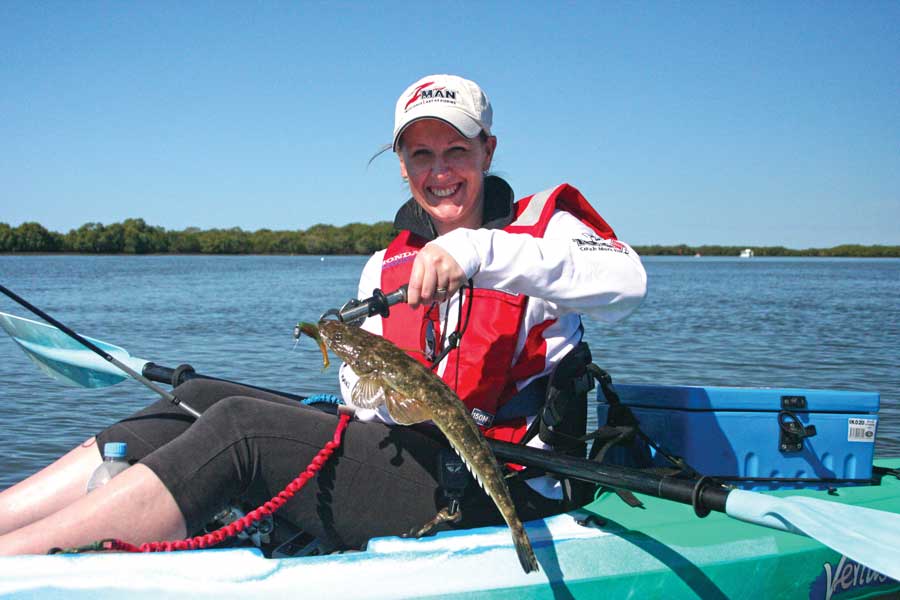
A three inch paddle tail plastic and quarter ounce jighead did the job for Sheri, who is all smiles with this flathead from the shallows.
Over the years of trolling lures we have found that weather and water clarity can also influence where you find the flathead and this is worth considering if you’re persisting without results. On bright sunny days and when the water is crystal clear, the fish can spook easily and you may have better results working slightly deeper water and the edges of the drop-offs. The opposite then applies when the skies are overcast or the water is murkier and you will often hook fish in as little as a foot of water.
Heavy rains and flooding over recent years have also affected the bite in my local waters. The influx of fresh and silt washed down the creeks, rivers and estuaries seems to force the flathead off the sandy flats, where I normally target them and into deeper water and weedy areas, as both of these will have higher salinity levels. The freshwater travels on top of the salt, so the water down deep will be saltier and I have been told that the weed also keeps salt levels higher. If the flathead are harder to find after heavy rain, head to the mouth of the system, target deeper water, weed edges and deeper structure such as bridge and jetty pylons, boat moorings and deep snags.
A sounder can be extremely handy as it can assist you in maintaining a preferred depth, locating drop-offs and selecting appropriate lures. This is especially true when forced to fish deeper. Most of my flathead trolling is done in 3 to 8 ft of water, so a quality pair of polarised sunglasses will get you out of trouble most of the time. Likewise a GPS is also handy, but not essential. A GPS allows you to create a series of troll lines to ensure that you are comprehensively covering an area. It also allows you to mark your position when you hook up, so that you can troll the area again. Quite often you will catch multiple flathead in close proximity, as a group of smaller 30 to 55 cm males gather around a 60+cm female, ready for spawning. So when it comes to flathead, if you catch a few small ones, persist as there may be a big one nearby. I always say ‘where there’s smoke there’s fire’ and this has been proven correct on many occasions.
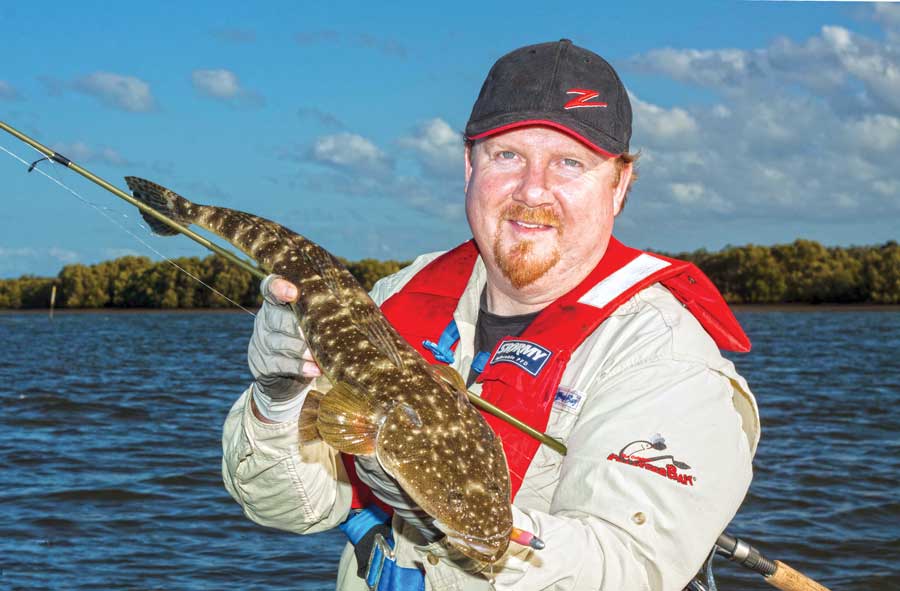
Stepping up to a three eighth oz jighead can keep your soft plastic on the bottom more effectively and in the face of this ambush predator.
Photo courtesy Steven Riding.
Traditional techniques – trolling hardbodies
The most popular lures for trolling are still hardbodied, bibbed minnows, and it’s easy to see why. They come in a myriad of colours, sizes and diving depths, respond well to being trolled and often have their approximate diving depth printed on the packaging to make lure selection easy.
Simply cast the lure behind the yak, lock the rod into the rod holder and start paddling. The vibration of the lure will have the rod tip pulsing and if this tip movement stops it is likely the lure has fouled with weed or other debris. Giving the rod a couple of rips forward can sometimes clear the fouled lure and it will come to life again, otherwise wind the lure in, clear the debris and cast it back out again.
The ideal lure choice is one that swims almost on the bottom while bumping the sea floor occasionally. If it’s swimming too far above the bottom it is out of the strikezone and if it is digging a trench in the bottom it can be hard work and is more likely to foul or snag. If you are paddling and notice you are moving across a section of shallower water, lifting the rod tip or slowing the forward progress of the kayak can allow the hardbody lure to run shallower. This is only true if the lure is a floating hardbody, which is the most popular option for trolling and again this information is commonly printed on the packaging.
Some of my favourite hardbodies for trolling include Lively Lures Mini Micro Mullet and Micro Mullet, Manns Stretch 5+, Tilsan Bass and Halco Scorpions, but any minnow style hardbody around 50 to 100 mm long that will swim at the desired depth is worth a go. My go-to colours include pinks, green/chartreuse and natural baitfish colours.
When trolling from a yak, compared to a boat, the trolling speed is generally less consistent and often slower. This slower speed opened the door to trying some other less common trolling lures. A floating hardbody will float up away from the strikezone at slower speeds and when paused, so I wanted to experiment with some sinking lures on the troll.
Good vibrations – trolling blades
I began trolling blades across the many sand flats that I fish and caught fish from the word go. I have had plenty of success casting blades for flathead, so I knew they would eat them, it was just a matter of working out the finer details. Being a sinking lure meant I didn’t have to paddle hard, instead I could cruise along while taking in the serenity and scenery as the blade vibrated away and touched down occasionally on the bottom, before being crunched by my target species.
For the shallows I opt for a TT Lures 1/6 oz Ghostblade or 1/4 oz Switchblade. I increase the weight to a 3/8 oz Switchblade when the water depth goes over about 5 ft and then the 1/2 oz when it passed about 8 feet. When trolling sand banks, mangrove edges and drop-offs, the depth is fairly consistent, so you only really need to change blade weights when you line up a different troll line.
Go-to colours are again, pinks, orange, chartreuse, green and natural colours, with golds also being a standout in dirty water. If you are worried about those two trebles attached to the bottom of the blade, you can swap them for Decoy lure singles to minimise snagging. With blades and hardbodies I generally stick to sandy, muddy and rubbly areas and if there’s too much weed around pack them away because winding them in over and over again to remove weed becomes frustrating. When there is a weedy bottom or a lot of loose weed around, this is where the last style of lure that I troll becomes so effective.
The soft side of trolling – trolling soft plastics
When selecting a soft plastic to troll it’s hard to go past a paddle tail or swim bait. These plastics have a ‘T’ shaped tail that provides plenty of action even at slow speeds and they are deadly on flathead. Any paddle tail around 3 or 4 inches is worth a go, with my personal favourites being the ZMan 3” MinnowZ and 4” SwimmerZ rigged on 3/0 TT Lures HeadlockZ HD jigheads. The ZMan plastics are buoyant so when I am paddling extremely slow, or even stopped and drifting, the plastic maintains a tail-up position on the bottom.
Being rigged on a jighead, with its top attachment point, a soft plastic bumps and glides across the bottom without the treble hooks hanging below to catch on weed and structure. This allows you to troll plastics in weedier areas and amongst more rugged bottom with a decreased chance of fouling. The trick is to get the plastic to run on or near the bottom and the easiest way to achieve this is to increase the jighead weight. I use a 1/4 oz jighead in the shallows and switch to a 3/8 oz as it gets deeper. I opt for a 1/2 oz for trolling the channel edges. Simply watch the rod tip and decrease the kayak’s speed until the soft plastic is bumping along the bottom.
When you’re trolling a soft plastic it’s important to note that it’s in the strikezone the entire time. This is ideal when you’re moving from spot to spot, or exploring new ground. As mentioned earlier, flathead often school, so if you’re new to a location, trolling allows you to cover ground with less chance of snagging and once you hook a flathead you can then spend some time prospecting the area further by casting plastics.
Access all areas – trolling weedless / snagless soft plastics
More recently I have taken soft plastic trolling to the next level, rigging the aforementioned plastics on 4/0 TT Lures Snake Head jigheads. These jigheads feature a free-swinging weight that is attached to a worm hook via a built-in wire frame. Use a tiny dab of super glue to lock your soft plastic onto the locking bend of the worm hook and troll away. Being a weedless/snagless rig and towing from the front of the attached weight, you can troll this rig through weedy and snaggy areas with minimal chance of fouling. Again I base this rig around 1/4, 3/8 and 1/2 oz jigheads.
This rigging method has allowed me to troll right along the edges of the spiky mangrove roots in search of the big flathead that often hunt in these areas. Accessing this area on the troll with hardbodies is virtually impossible and once those trebles find the roots they are hard work to extract. If you want to access all areas, including those you haven’t been game to drag a lure through before, give weedless rigging a go.
The kayak is perfectly suited for slow troll speeds and for accessing the shallow areas that flathead call home. The next time you head out in search of flathead or travel from spot to spot, put a lure out the back… you never know, it could produce the fish of the trip.
Justin has been fishing for over 35 years, including over two decades flicking lures from a kayak. He is a member of the Tackle Tactics Pro Team, writer, magazine editor and he enjoys kayak based touring and camping, while fishing both the fresh and saltwater.