Trevor Hawkins explores some of the fishing opportunities available in the
Snowy Mountains for those looking to explore away from the big lakes and highlights a few of his favourite small waters.
There’s no denying the allure and mystique of travelling and fishing the big lakes of the Snowy Mountains as the trout are usually big and fat and in enough numbers to give even rank outsiders a good chance of catching one or more fish. The lakes are also vast enough in size to allow both bank and boat anglers to search out different bays and arms to keep the fishing interesting over an extended trip.
Both Lake Jindabyne and Eucumbene feature heavily in my pre Christmas fishing trips, as does Tantangara Dam to a lesser extent. At these times I will happily spend whole days fishing my regular haunts or seeking out new bays to explore without the need to fish other waters. However as the weather warms around the flanks of Australia’s highest mountain my fishing in the big lakes themselves tends to be restricted more to very early morning forays, or more often, evening and after dark fishing; especially once the mudeyes start appearing in numbers.
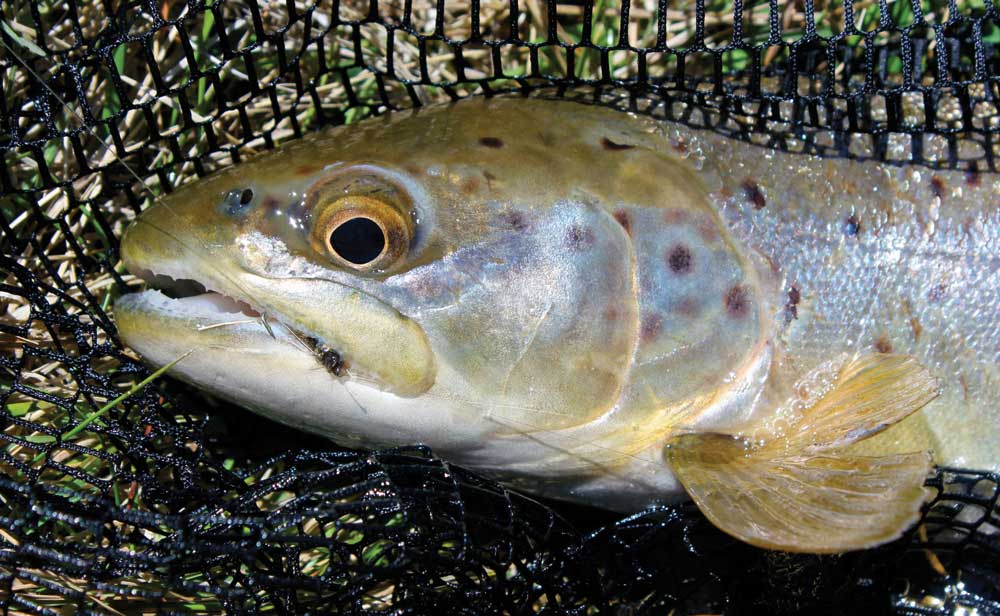
Nymph caught brown trout.
DOWNSIZING
But once midsummer arrives my daytime fishing interests shift from the big lakes to the numerous surrounding streams and smaller, more intimate lakes that are so typically Australian with their sun bleached grass fringes and nearby twisted snow gums.
At these high altitudes at any time of the year it’s a harsh environment. During winter the rivers are closed to fishing and the smaller creeks are often completely obscured by a blanket of deep snow. The smaller lakes are often frozen over completely whilst during the summer months the intense heat at this altitude can reduce many small breeding streams to mere trickles. But for all the variances in environmental conditions that occur here, there are always waters that remain flowing and cold enough to allow the hardy trout to survive and in some cases even prosper. Indeed some waters have big resident and spawning holdover trout from past winters to liven proceedings somewhat for all anglers, no matter how skilled.
It’s fair to say that anglers out searching for bigger stream fish are best off, generally speaking, concentrating their efforts on streams that flow into any of the larger impoundments or bigger rivers. For every big fish you catch in some of the smaller dams like Three Mile, Tooma or Dry Dam there are likely a thousand ‘guides pounders’ swimming around waiting to be caught.
Now don’t get me wrong, I love fishing these small stillwaters and their inflowing creeks, but when I fish them I do so more for the angling experience than the size of fish I expect to catch.
Conversely just because a lake is of a reasonable size doesn’t necessarily equate to it holding big fish either and a perfect example of this is Guthega Dam, which at times freezes completely over in winter. Maybe this waterway simply isn’t fertile enough to encourage big fish growth or doesn’t hold enough big fish to warrant a claim of being a bigger fish lake, yet Island Bend Pondage not many kilometres downstream on the same river at a lower altitude, holds a good number of better fish, go figure!
What one should keep in mind, lakes and rivers at slightly lower and warmer altitudes usually equate to a more fertile environment and therefore larger fish growth. This isn’t always the case but a general rule of thumb.
I’ve put together a short list of a few of my favourite small streams and lakes that I think are worth a visit for anglers looking to expand their horizons when the large lakes start to all look the same. It’s nowhere near an exhaustive list, but I reckon you won’t be disappointed with any of them, especially if you’re looking to break up your trip to the big lakes with some small water sojourns.
-
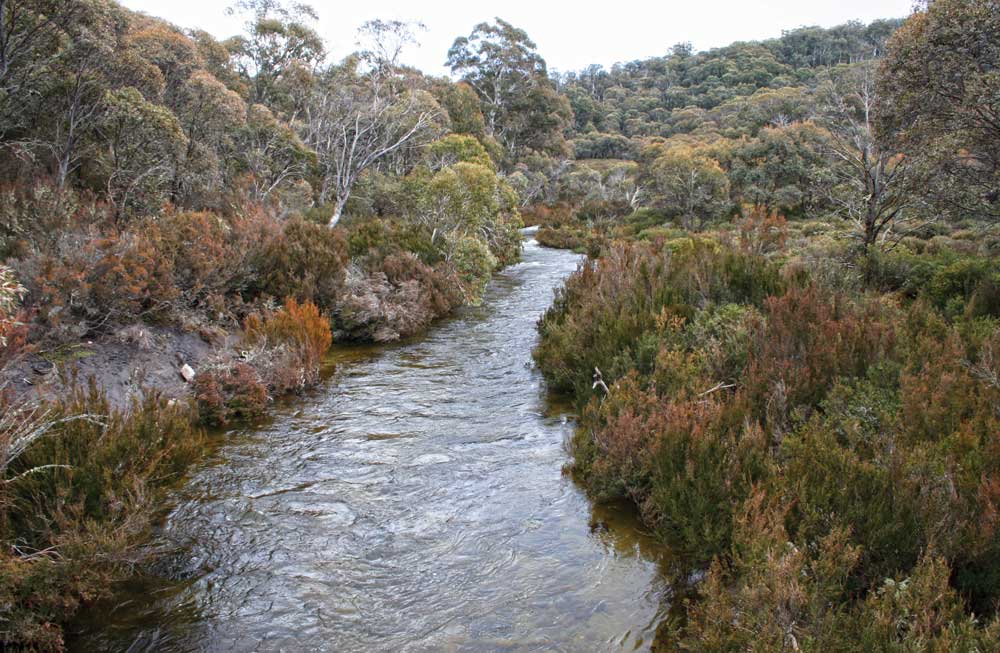
- Burrungubugge River.
-
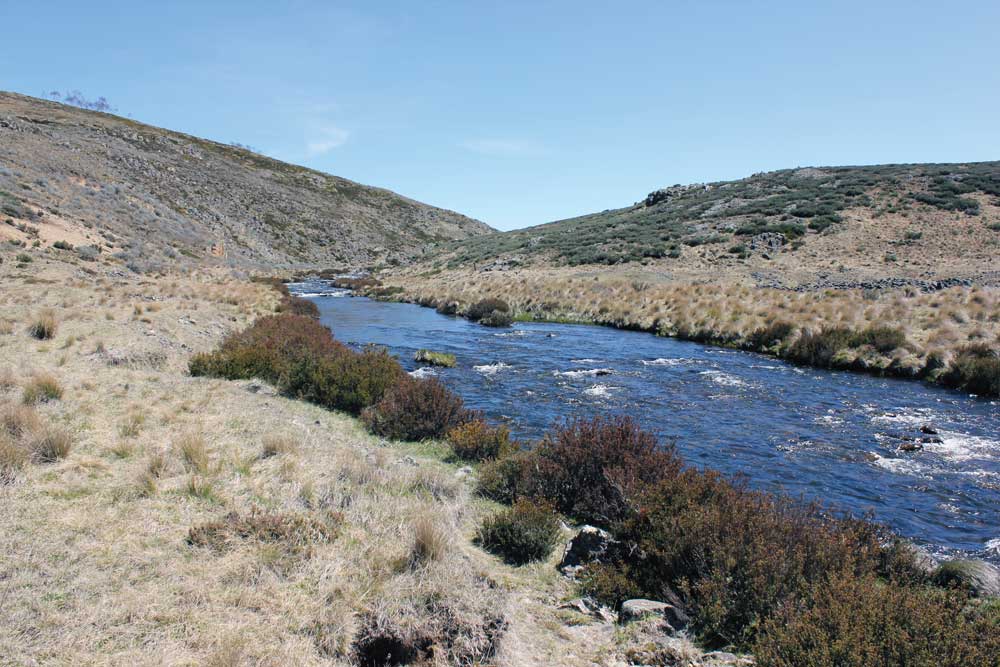
- Upper Eucumbene River.
BURRUNGUBUGGE RIVER
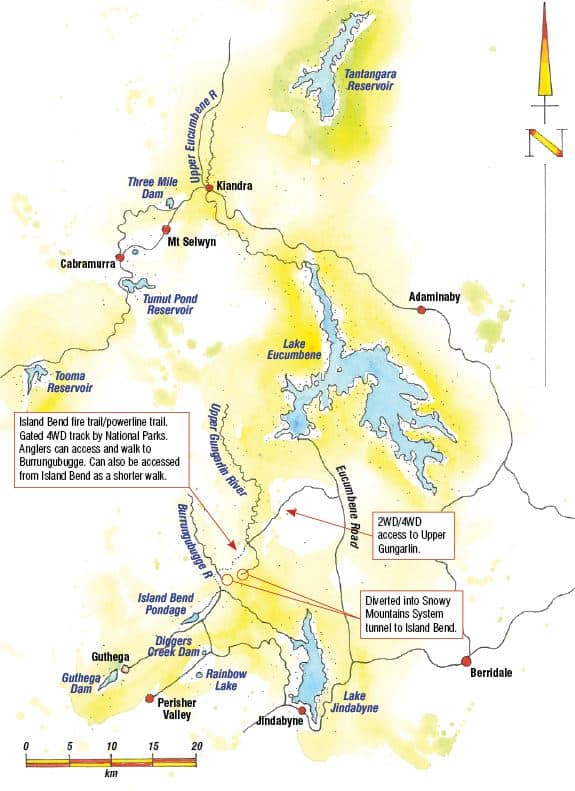
This little gem is one of the best small creeks in the area in my opinion and much of its appeal I’d attribute to the fact that it gets you into some real ‘out the back’ areas and requires some effort to access but without the need for any true bush craft skills. There are few streams that have been left untouched by the Snowy Mountains Scheme and for the most part all we can hope for is that most flow freely for at least the majority of their journey. So it is with this creek and the next stream mentioned. Virtually the total length of the Burrungubugge and most of the Gungarlin River are, for all intents and purposes, wild rivers. This wonderfully named stream has its origins high in the Jagungal Wilderness and is best accessed via walking in along Island Bend Road which is closed to vehicles.
 This pristine creek is often icebound right up to Christmas, which fits perfectly in with my Snowies fishing calendar. It contains large numbers of mostly small rainbow trout around the 230mm mark with the occasional pounder to liven things up slightly. It’s a water that really needs to be waded due to the thick bank side scrub and numerous wombat holes and this is best done once winter snow melts have subsided and flows have reduced to allow ease of travel.
Numerous small waterfalls, plunge pools and boulder runs are encountered on this stream and the beautifully marked mountain trout that inhabit it aren’t fussy feeders and will happily rise to most dry flies given half a chance. My preference is for a little foam-bodied attractor dry fly using a four or three weight fly rod. Single flies are the way to go, not only because they will account for more than enough trout any angler would want to catch, but also because pinpoint casting is mostly required due to the tight riparian vegetation.
Lure anglers fishing 1-3 kg outfits and fishing small bladed lures will catch all the fish they want also and these basic lures, that work as soon as they hit the water, are the way to go in the shallow or restricted runs amongst the numerous boulders.
When hiking in to fish this water I usually pack waders (the water is bloody cold even during summer for wet wading) and wading boots, lunch and fishing gear and so forth into a backpack which I leave hidden near the river whilst fishing. This allows for a more comfortable hike in on the track to the creek, especially during the hottest days.
-
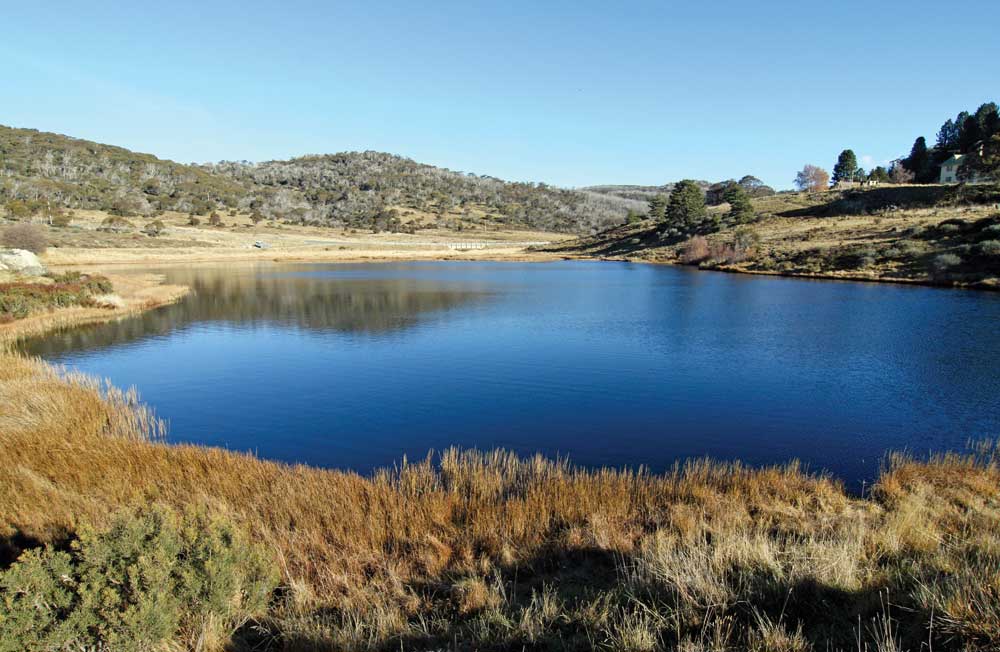
- Diggers Creek Dam
-
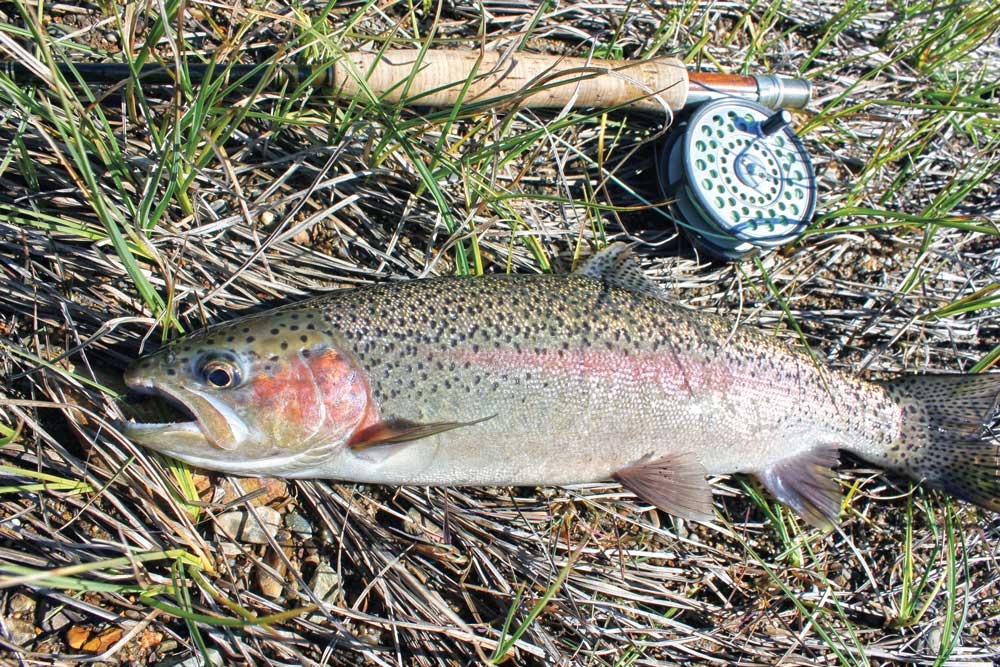
- Better than average upper Eucumbene rainbow.
-
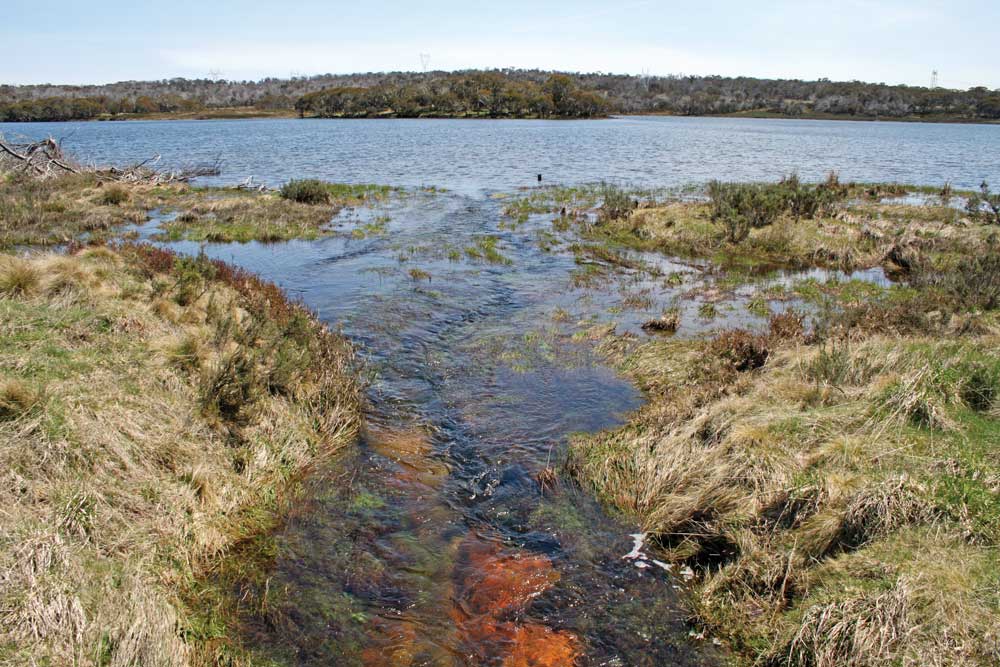
- Three Mile Dam
UPPER GUNGARLIN RIVER
For anglers who like fishing remote, high altitude snow plains streams, the mere mention of the Gungarlin River is enough to get the heart pounding. Also flowing south from the Jagungal Wilderness this pristine stream meanders gently for kilometre after kilometre through flat snow plains that allow for easy fishing along clear grassy banks without the need for wading, unless crossing the stream becomes necessary.
This upper section of the river is accessed from below the Lake Eucumbene Wall via the Eucumbene Road out from Jindabyne, or the Rocky Plains Road out from Berridale.
This river is very popular with campers along the lower end of the upper section where there is a single drop toilet and lovely camp spots beside the river. During the peak of summer this high altitude (1350 m) plain offers some respite from the heat, along with good angling.
There are few rivers that offer so many kilometres of gently flowing alpine stream as the Gungarlin. Winding through mostly treeless snow plains it offers both beginner and experienced anglers a fine taste of high altitude, open plains angling.
The river carries a good head of mainly small rainbow trout with some browns and less commonly brook trout mixed in. There are a number of deeper holding pools along the rivers length that do harbour the occasional, harder to catch bigger trout, but more importantly, these deeper pools provide a refuge for trout of all sizes during peak angling periods.
The Gungarlin offers fishing opportunities for both lure and flyfishers as well as being a perfect water to teach young and beginner anglers basic fishing techniques. The river has a diverse array of ripples, undercut banks, deeper pools and glides that all but scream trout. Almost every section of this stream looks like a possible fish holding area, it really is that good!
Lure anglers will find the Gungarlin very suitable if fishing /walking the banks while working their way upstream, casting and working small bladed lures and shallow swimming minnows back through the pools and along the edges of the undercut banks. Remember that the trout are mostly small and as such ultra light outfits will give greater enjoyment for the sport fisher and removal of the barbs on treble hooks will allow quick release of the diminutive trout.
But this stream really is a flyfishers Mecca. Where else can you find such solitude along with a stunning alpine stream that can be wet waded or fished from the bank in boots and shorts. Even if the trout aren’t co-operating it’s hard to pull yourself away from this river as every bend seems as good or better than the last.
While the Gungarlin River is suitable for using very light outfits in experienced hands, my preference is to use a nine foot 4 weight outfit that allows me to punch casts into the often strong northerly breezes that are frequent in this valley at times.
Despite catching fish on various flies here, you can get by with the standard Royal Wulff, Red Tag or Adams for 99% of the time. If these don’t produce, a fall back option is to swim small nymphs through the runs under a parachute Adams.
UPPER EUCUMBENE RIVER
This river hardly needs an introduction to regular river fishers of the Snowy Mountains. It keeps producing fish despite the relentless fishing pressure it gets at times. I usually only fish it mid week away from holiday periods but even so, it still at times requires arriving early in the day to get on the river first. The section of river above the Kiandra Bridge offers superb fishing for both brown and rainbow trout that can go from a few grams to many kilograms in weight. Out of the three streams covered in this in this article, this is the one where a trophy may be only a cast away so be prepared. While the downstream area from the lake up to the bridge offers fantastic fishing, the smaller headwaters above the bridge allow for more precise and technical fishing to get the most from this section. While the river through here is often not that wide, it is deep in sections with numerous slots and undercuts that have to be fished technically to get the best results. On days where I have just been going through the motions along this stream and catching a few fish, I have had anglers lagging behind me taking more and bigger fish simply by fishing with a more intensive technique. You need to be able to read and fish the water technically here to get the best from it. Some of this water requires numerous casts, drifts and retrieves to make sure you cover all possible lies because the trout are often holding tightly down deep in narrow slots and simply don’t see an anglers fly or lure unless it passes through or immediately above their position. The same goes for the undercut banks that offer prime habitat for trout to hole up in.
Early in the season tungsten nymphs under indicators or deeper swimming lures are the go. However as the weather warms and the insects (especially the hoppers) are out and about then fishing a single dry or dry and nymph dropper are very productive, but be prepared to extend your dropper where necessary to get the nymph down in the deep chutes.
Lure anglers fishing soft plastics, bladed lures or various depth-swimming minnows will catch plenty of fish although as the season progresses and the remaining fish become wary, changing to lighter finesse outfits and subdued smaller lures, or lightly weighted creature baits and soft plastics, are more effective in the harder fished sections.
THREE MILE DAM
Three Mile is probably the best known of all the small lakes in the region and offers those with limited mobility a chance to camp and fish in a more picturesque grassy woodland environment than is available on the bigger lakes.
It’s another water that fishes better when the water warms slightly and airborne insects get out and about and fire up the trout looking for a feed. The lake is located approximately 7 km from Kiandra along the Link Road (that leads to Cabramurra) and is easily accessed via a good 2WD drive road. Whilst it is a relatively small lake, it is still large enough in area to allow anglers to get away from the more frequented camping areas, find a secluded bank and enjoy some good fishing on a lake that has a real small water charm.
This is a perfect lake for kayaking or tubing, both of which open up some deeper water areas that are beyond the wading anglers reach. While all angling methods on this lake are permissible, lure and flyfishing are generally the most successful, especially for sport fishers who aren’t chasing a feed as those fishing the big lakes often do. The lake holds a good population of mostly smaller, 300-500 gram brown, rainbow and brook trout.
During summer, flyfishers often rely on the evening rise to various waterborne or terrestrial insects and using flies such as Red Tags, Geehis and caddis patterns will often take surface feeding fish. Searching with small black nymphs and black beetles, Yetis, damsel fly nymphs and Tom Jones wets is also productive and after dark searching with small black Muddlers across the surface or below the surface with various small olive, brown or black buggers can result in better fish. Fishing after dark on mild summer evenings on this water is a real pleasure.
Lure anglers do well trolling small bladed lures or Tassie devils across the dam well back from a kayak or canoe, or a deeper diving smaller minnow lure around the deeper water near the dam wall. Casting winged lures along the dam wall area is productive during the early morning and evening. Walking the banks casting and retrieving smaller lures is always productive on this water when the fish are out and about, but it’s never easy water and anglers need to put in a real effort to get consistent reward.
Later in the season anglers can do well by concentrating their efforts around the bay where Three Mile Creek enters the lake.
RAINBOW LAKE AND DIGGERS CREEK DAM
These two very small lakes are both located along the Kosciuszko Road leading to Perisher Valley and Charlotte Pass out from Jindabyne Township.
Rainbow Lake is certainly the prettiest of the two waters and is located in a beautiful tree-lined valley, a very pleasant ½ hour walk in from the road and is well signposted. Diggers Creek Dam is located immediately beside Kosciuszko Road and the easiest accessed for those with limited mobility.
Both lakes offer some restricted ultra-light lure fishing, although in truth, where they really shine is with their lovely small water, light line flyfishing opportunities. The trout, rainbows, browns and brookies, rarely reach more than pan sized. The short summer season and less than fertile water, along with natural recruitment from Digger Creek keeps the fish numbers up and size down. But what they lose in size they make up for with their brilliant wild fish colourings and anglers should never visit these waters with the expectations of catching lots of easy small fish, far from it in fact, especially so in Rainbow lake where polaroiding for bank cruising fish is the go. These fish often require fine and far off presentations to avoid sending all nearby fish scurrying for cover. You need to bring your ‘A’ game on this water.
Where these waters really shine is with the willingness of the fish to get up on top and feed off the surface in all but the worst weather conditions. Most of the time this activity is to very small midge, both hatching and adults, while at other times they will feed on various wind blown terrestrials. Given milder weather conditions such as those on balmy autumn days that are typical in the region, the trout will be up and feeding in earnest, and hours of fun yet challenging fishing can be had.
EXPLORING
Well, I set out to nominate a few small waters that are some of my favourites but the truth is, while writing this I kept thinking about all the waters I left out, there’s lots of them and many are just as good if not better than this selection. But I reckon the above gives a slight glimpse of what else is available up that way for anglers wanting to have a break from the big, ‘famous’ waters of the region. The only other advice I would give is be careful when you start out exploring smaller waters, it can be addictive, especially for those with a penchant for getting into the bush and away from the big water crowds.
Trevor is a Pro Staff member, Field Editor and illustrator for AFN publishing. He has over forty years fishing experience with flyfishing and light line lure fishing being his favourite angling methods. He also enjoys kayaking, hiking and AFL Football. He lives on the shores of the Gippsland Lakes in Eastern Victoria.