The flooding of last summer has created a brand new ‘barra’ fishery on Bundaberg’s doorstep as Dave Magner explains.
In the aftermath of the 2013 floods, Bundaberg anglers have had the opportunity to experience the benefits of a new-look fishery. Floodwaters inundated local river systems and all the surrounding dams overflowed, spilling thousands of barra and bass into the rivers and creeks below. As a result, these waterways which previously weren’t worth fishing suddenly became angling hotspots. To say their popularity as angling destinations skyrocketed overnight would be a massive understatement.
The main contributor to this situation was Monduran Dam. Now I’ll probably put quite a few of the locals offside here, but while Monduran regularly produces absolutely huge barra, I have never found it to be an easy dam to fish. As long as you are prepared to put a bit of time into the place you will tangle with a barra or several, but just don’t expect a hookup every second cast. The main problem with Monduran is the size of the place. It’s such a big dam that the fish have too many places to hide.
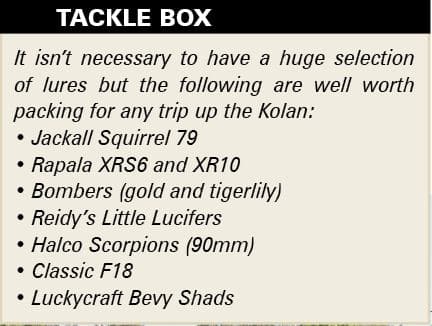 I’m glad to say that the fishing in the freshwater section of the Kolan River (which flows out the bottom of the dam) is quite a different story. Now that they are in the river, the fish have much less water to hide in and while there are still plenty of snags to contend with, most of the bigger piles were swept away in the floods.
Many anglers find ‘reading’ a river to be an easier task than finding fish in a dam; running water makes it easy to quickly identify fish holding features. As a result, you can usually be confident that your lure is spending most of its time in productive water and that usually equates to more action and less time searching around trying to find the fish in the first place.
Barra Beginners
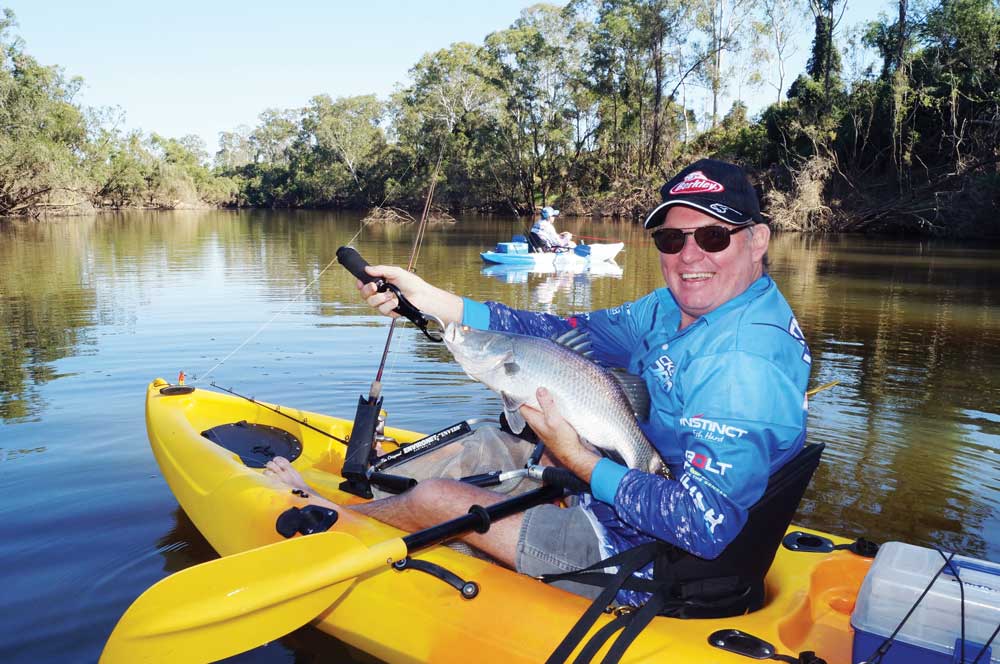
The vast majority of kayakers usually target more common estuary species like bream and flathead or smaller freshwater targets like bass and yellowbelly: this makes the Kolan River a significant but welcome challenge for many of us ‘yakkers’. Sure there are a few die-hard big barra specialists amongst our ranks, but chasing these huge fish in our stocked impoundments is pretty specialised stuff and it requires a very dedicated and committed approach. Consequentially, it’s not the sort of thing that a lot of kayak anglers would have had a great deal of experience with.
The good news is that as far as barra fishing goes, the Kolan is a fairly easy place to make a start. Most of the fish are typically between 50 cm and 80 cm in length, making them not all that much bigger than a decent bass. Of course, there is the odd much bigger fish mixed in with them, but the average fish are manageable with just a few slight alterations required from the standard bass fishing gear and techniques. If you haven’t targeted barra from a kayak previously, the experience is definitely unique; it’s a pretty surreal feeling sitting in your kayak and watching a hooked fish leaping around at head height, trying its best to shake your lure free!
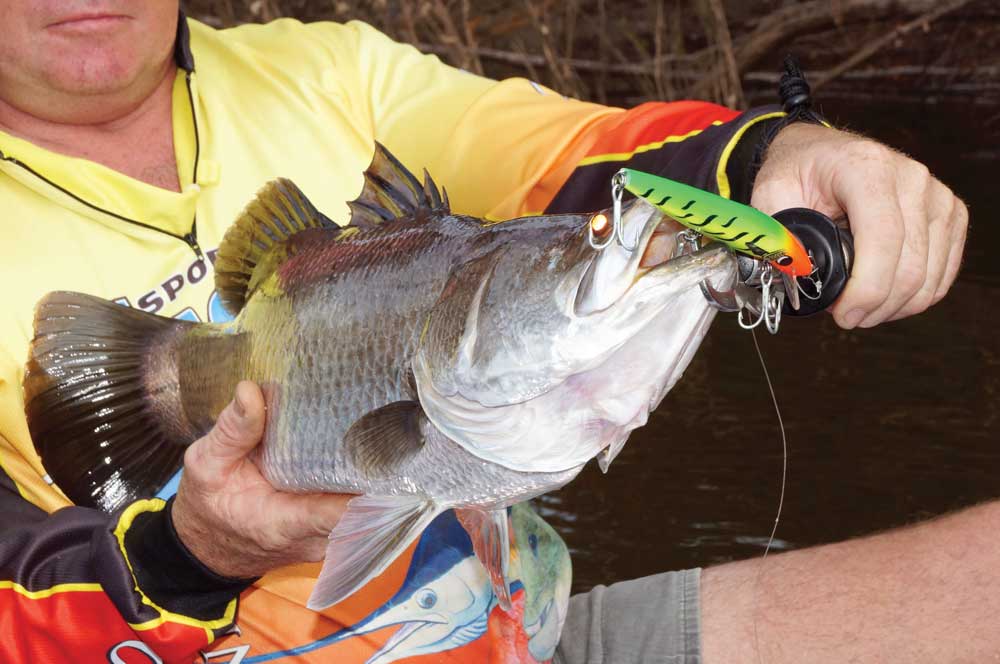
You don’t need huge deep diving lures for Kolan barra. The Classic F18 is about as large as you
need to go.
Kolan Barra Requirements
If you’ve had a bit of experience at lure casting around snags for bass or done a bit of casting into man-made structure like jetties or oyster racks for bream, you’ll probably have the basics of the game pretty much under control. Like most fish, the barra will normally be found tight to the structure. All an angler needs to do is get a lure right in close to the fish and work it out with a stop-and-start retrieve which incorporates plenty of pauses.
While the average size of the fish might not be huge, you will most likely need a heavier outfit than you are accustomed to: I normally opt for a low-profile baitcast outfit spooled with 20 lb braid. You could go for a slightly larger round profile reel and say 30 lb braid if you are worried about handling a bigger fish should it eventuate, but there’s not really a need for it. Mount the reel on a 4 to 6 kg stick and you will have a more than suitable outfit.
You will have to beef up your terminal tackle however. Most barra encountered will be well under 1 m in length and if your leader is too heavy, it will subdue the action of your lure and reduce the number of strikes you are likely to get. I normally run approximately 1 m of 15 kg mono for a trace (green coloured Schneider is a good choice) and it seems to do the job in the vast majority of cases.
The same thinking needs to be applied to hooks. Yes barra can bend the strongest of hooks with ease but don’t get sucked into putting super-heavy duty trebles on your lures. Oversize hooks are another sure way to kill a lure’s action and will reduce the number of strikes. Go with light but strong trebles and keep them at a realistic size for the lure you are putting them on. It’s almost impossible to apply lots of pressure on a fish from a kayak anyway, so there will be less stress on the hardware than is normally the case when chasing barra from shore or boat.
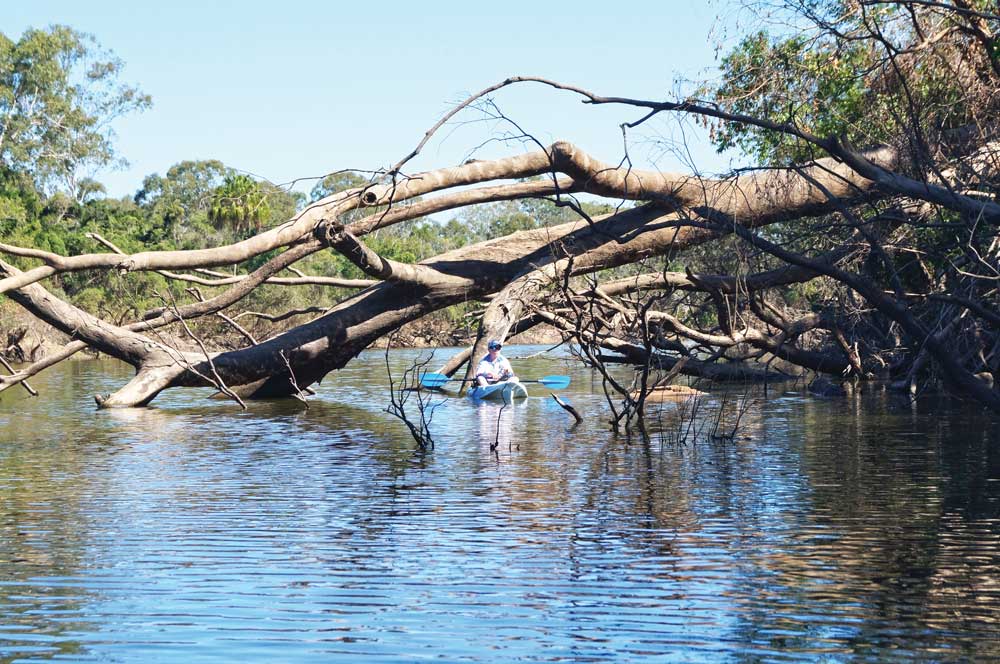
When you find a massive snag like this, it’s almost a sure bet there will be a barra or two in there somewhere.
Lure Lore
The other major change relates to lure choice. While the fish aren’t averse to eating Bombers and other more traditional barra style lures, we have had the most success with mid-sized suspending minnows. Lures around 75 or 100 mm seem to be about right, with both minnow and shad profiles working well. The key seems to be the use of suspending lures which can be left to hang in the fish’s face during a pause in the retrieve. Most takes will come while the lure is just sitting there, so it’s hardly surprising that neutrally buoyant lures are very effective.
Popular varieties of bass lures will also tempt fish in these parts. Sinking bibless lures like the ever popular Jackalls will work (though these will need a hook upgrade). Surface lures can work too, particularly in low-light situations and if you think a bass makes a noise when it nails a surface lure, wait until your first barra boofs a fizzer right beside the kayak. Take my advice and wear a pair of brown jocks for that one! Plastics can be really successful too, with paddletail swimbaits being very popular among the locals.
Surprisingly, about the only bass lure which seems to struggle when used for barra are spinnerbaits. You can catch barra on them but the success rate seems to be well below that of other lure types so we rarely bother with them. Even if you do hook a barra on a spinnerbait, it will probably be the last time you use that lure as barramundi tend to put a heavy toll on the wire frames.
-

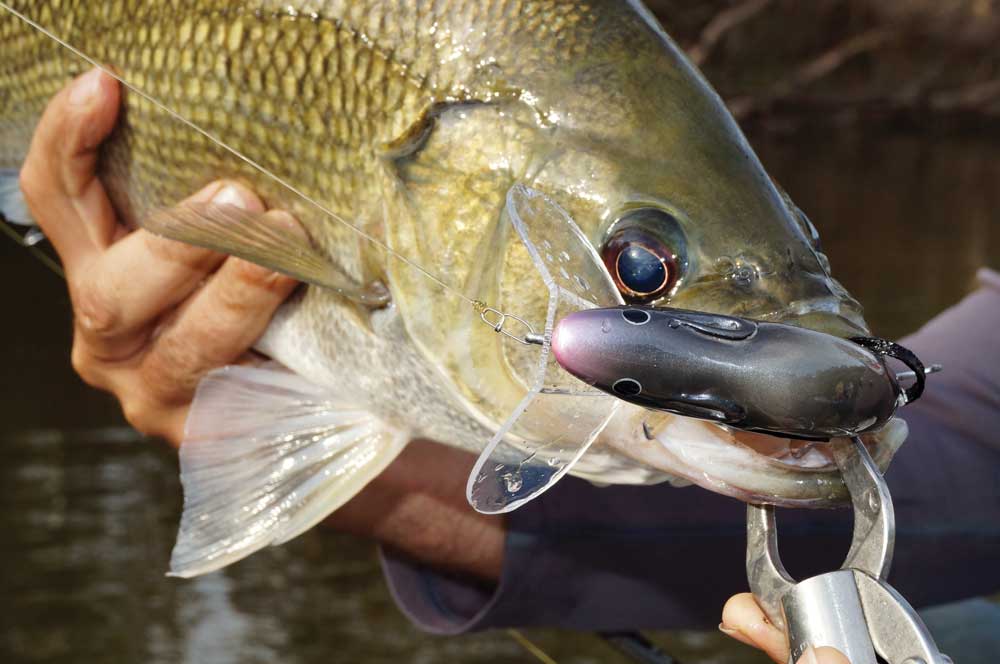
- Surface lures like this Kuttafurra Mouse are a big hit with both the barra and bass on the Kolan.
-
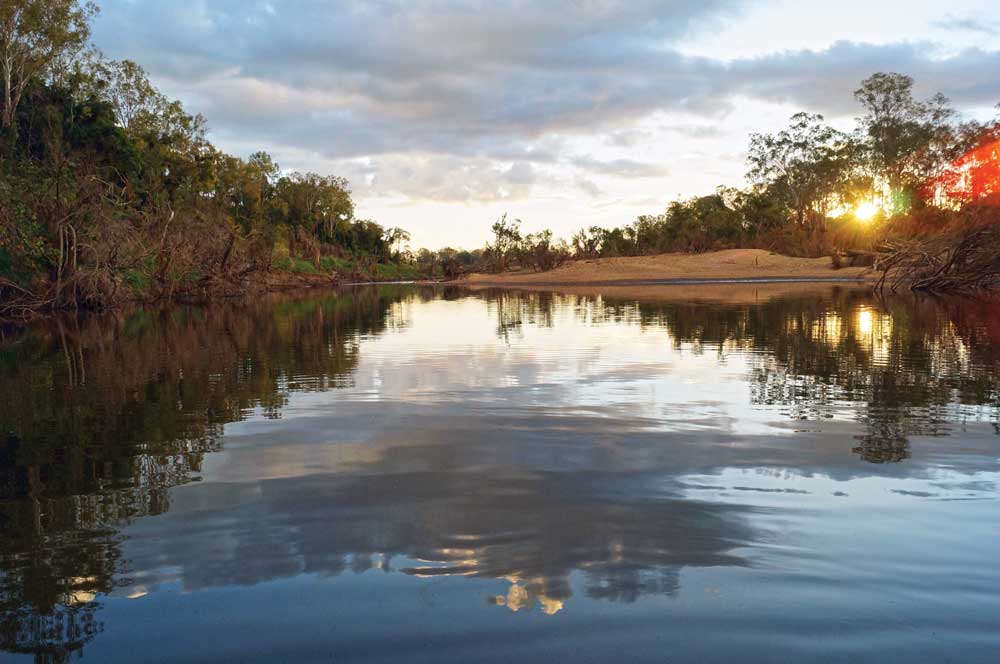
- Sunset on the Kolan, time for a surface lure. Will it be a bass or barra that gets your lure first?
Fight Time
Barra are an aerial fish once hooked. There have been times when I’ve been looking eye-to-eye with a leaping fish. When it’s happening at close range, as it tends to do when you are fishing out of a kayak, it almost turns the fishing into hand-to-hand combat. Anglers should approach this stage of a battle with caution as there is a real risk of having a fish land in your lap or that of a lure coming flying back at your face.
The bigger barra can and will tow a kayak around with ease. This can make it hard to keep them out of the snags and the success, or otherwise of your brief encounter, usually depends on how you have positioned yourself prior to making the cast. You need to make sure that the nose of the kayak is not pointed at the snags before you hook-up, otherwise, you’ll be joining the fish in the timber and your lure retriever will be getting more of a workout than your landing net.
I fish from a Hobie Pro Angler and this is where the pedals really come in handy. Often, all you can do is thumb the spool and try to tow the fish out into the middle of the river with you. If you are able to lead fish to safer country you will find many encounters with these impressive fish can be won.
 Worth the Trip
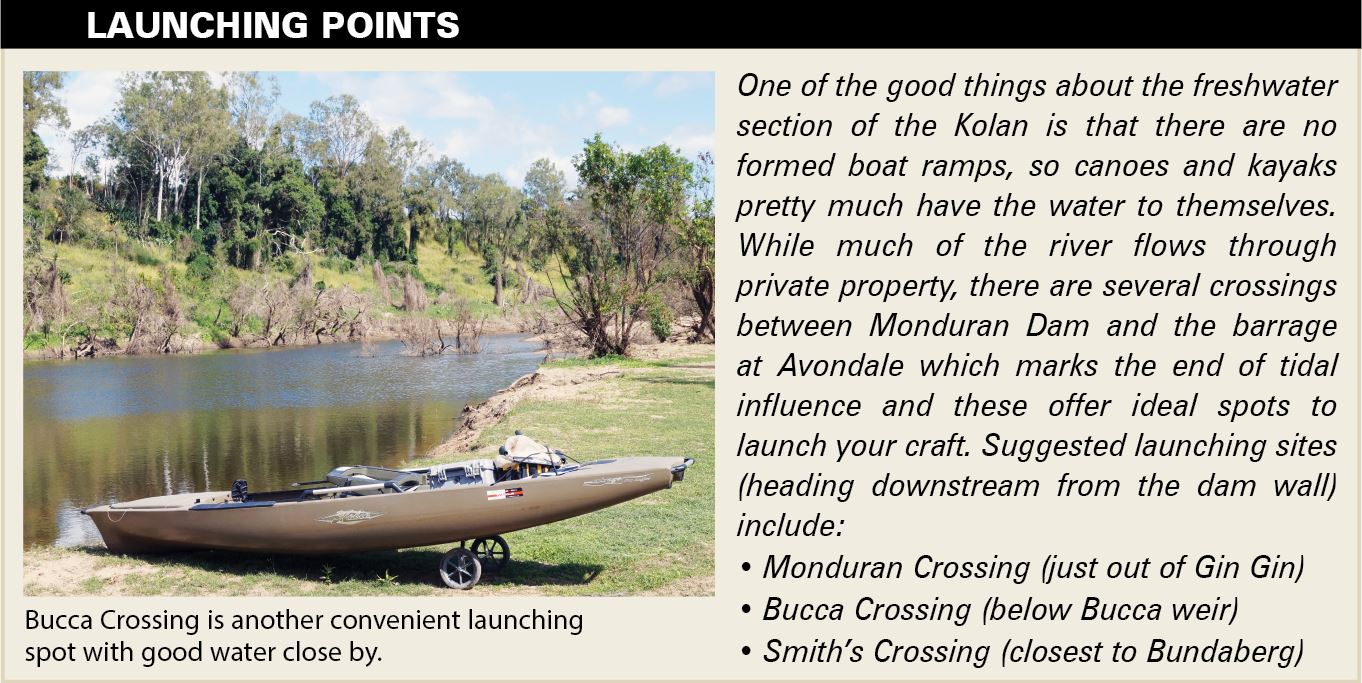
It’s not often that you get the chance to have a go at something as relatively new as the barra fishing in the Kolan River. Catching barra from a kayak is not hard to do. It is certainly different to the light tackle finesse approach used for bream and other species so it makes a great change from the styles of fishing most of us typically accustomed. My advice would be to try and make a trip up to Bundaberg over summer and hit the water to give it a go.
Dave Magner is a keen angler who relishes the freedom and flexibility that fishing from canoes and kayaks brings. While he’ll chase anything with fins, he has a real passion for our native and imported freshwater species