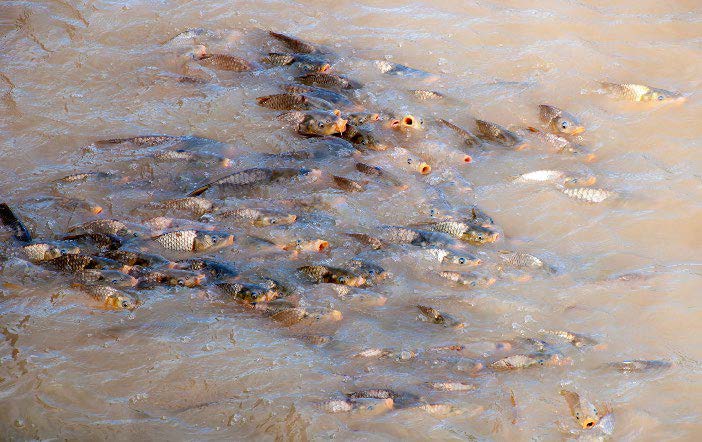
It’s been more than fifty years since carp exploded into our waterways following widespread flooding across the Murray Darling Basin in the 1970’s. With each subsequent flood, they push further upstream, take more territory, increase turbidity, destroy aquatic vegetation, erode riverbanks, displace native fish, and ruin our fishing and camping experience. Despite half a century of trying to control them using netting, exclusion devices, baiting, electrofishing, commercial and recreational fishing, these options provide only short-term and local controls.
The Federal Government has researched the use of a carp herpes virus as a biological control agent for almost two decades culminating in the publication of the National Carp Control Plan in 2022. In 2024, the Federal government announced a further $3 million dollars in research funding. Timelines to complete this research and to make a final decision on the use of the carp virus remain unclear. To address some of the key information gaps, the VFA engaged leading researchers to prepare a plan for a field-based bio secure carp virus trial – to date this proposal has not been supported by the Federal Government.
The VFA prepared a detailed submission to the Federal Government to list carp as a key threatening process under the EPBC Act alongside other invasive species like rabbits, goats, pigs, foxes, and others. Listed invasive species enable the development of a national threat abatement plan which drive a coordinated investment – to date, our proposal to list carp has not been supported by the Federal Government. The VFA has also nominated carp for listing as a potentially threatening process under Victoria’s Flora and Fauna Guarantee Act 1988. The nominations provide a foundation for building a coordinated approach to improve the health of our freshwater native fisheries and aquatic ecosystems by managing carp – we are awaiting feedback on this proposal.
Over the last few years, on the back of another flood and record numbers of carp, the VFA has engaged recreational and commercial fishers, landowners, farmers, NRM agencies and local and federal government to raise awareness about the impacts of carp, the extent of the problem, the need for an integrated approach to Australia’s carp problem.
We’re building a broad-based coalition of support for more action on carp by hosting a national carp summit in northern Victoria in the new year.
As fishery managers we can’t stand by and watch our rivers fall to the compounding impacts of carp year on end. We need recreational fishers to advocate for more action on carp, to protect our waterways and our wonderful recreational fisheries. For more information, go to: Australia’s Carp Problem – VFA
The War on Carp
Share This Story, Choose Your Platform!
Related Posts