Lake Eucumbene is nestled high in the southern alps of New South Wales and is regarded as mainland Australia’s premier trout fishery. It is part of the Snowy Mountain Hydro Electric Scheme and sits 1200 m above sea level. The lake is a vast open body of water which makes it susceptible to high winds and drastic changes in weather conditions. Caution must be exercised every time you’re on the water and paying attention to the weather forecast, particularly if cloud starts building up or any noticeable change in wind direction or velocity occurs are vital.
When at full capacity it holds a staggering amount of water estimated to be almost nine times that of Sydney Harbour. The lake receives natural flows direct from the Eucumbene River and snowmelt through spring from the vast catchment area. In addition, there is indirect water flow via tunnel diversions from the Snowy, Tumut, Murrumbidgee, and Tooma Rivers. The lake is 110 km from Canberra and only 55 km from Cooma – often referred to as the gateway to the snowy mountains. I have fished the lake extensively for the past 30 years and as difficult as it has been I have attempted to nail down my top 10 spots on this wonderful lake.
 1 The Providence Portal arm
The Providence Portal arm is situated at the very northern end of the lake. The actual portal is around three kilometres from where the Eucumbene River flows into the lakes and is classified as a ‘river’ by New South Wales fisheries which means it is closed to any form of fishing from the long weekend in June until the start of the October long weekend every year. The flowing water around the Eucumbene River mouth attracts big crowds from late autumn into winter who hope to meet one of the late spawning brown trout that the area is renowned for. For those brave souls prepared to put up with the sub zero temperatures at night, there are some excellent opportunities over the Providence flats. Many fly fishers dredge the area at night with large wets searching for that trout of a lifetime. Lure casting through the day light hours is productive especially late of an evening when the big fish move into the shallows. Slowly hopping soft plastic grubs and worms in natural colours is also a proven method on the browns. Bait fishing with scrub worms and bardi grubs is highly effective through winter and it is not uncommon to bag out on rainbows before lunch.
2 Anglers Reach
Anglers Reach is a popular area to launch your boat as it allows anglers to travel north towards Providence or south towards where the lake opens around Old Adaminaby. For those who want to fish close to the ramp there is ample opportunities for both bait and lure fishers. Bait fishing is productive throughout most of the year with yabbies and worms the pick of baits throughout winter. Artificial baits will work year-round and can be used in conjunction with another bait via a three-way swivel rig and the two-hook rig. This rig is a good option as it allows you to hedge your bets with two different baits. You can then work out what the fish are biting on and swap the other bait lines to the successful bait. The western shoreline, opposite the Lakeside Village, is a relatively barren featureless stretch that does not look over appealing to the naked eye. There are, however, many quality bait fishing banks and indentations that are worth fishing from. The bulk of the fish taken here are the standard Eucumbene rainbows in the 450 to 900 g bracket. Trolling this barren stretch is most productive in winter, as the fish will be nosing around the shallow margins searching for yabbies, beetles, frogs, and anything else on offer. The opportunistic nature of trout at this time of year means trolling a mix of Tassie Devils and shallow running hardbodies can deliver a brace of rainbows with a big brown or two mixed amongst them.
3 James Creek Inlet
James Creek Inlet is one of my favourite areas along with Big Tolbar near the dam wall end. It’s a 20 minute run south from Anglers Reach and fractionally longer from Old Adaminaby in good conditions. It is worth spending the entire day in the vicinity of the inlet, working specific locations inside the inlet and the smaller bays either side of it. If there are moderate to strong winds predicted from the west then this is my go-to spot. In late winter there is a good chance of rainbows schooling up and congregating in the bay. Small spinners worked around the fringe of the school will allow lure casters to hook fish without spooking the entire school. Trolling south around Beacon Point is worth a try if the fishing inside the inlet is quiet. Opposite James Creek Inlet is Wangrabelle Bay that is known to produce when working blades from a boat. Cast close to shore and slowly roll your blade down the descending bottom. Best results are during the middle parts of the day when the fish have moved off the edges to patrol the drop offs.
4 Eucumbene Cove and Dam Wall
The water around the dam wall is obviously the deepest in the lake, yet fish will still be found in the top few metres of the water column during winter. Trolling and casting from a slow moving boat are both equally effective. Trolling is an all-day proposition in the cooler months with flatlining accounting for the bulk of fish. A quality sounder is beneficial in this area as fish marked up, in the 4 or 5 m depth range may not move up to strike a shallow running minnow or Tassie Devil. If you are faced with this scenario then attach a deep diver that will swim and hold at the three metre mark just above the fish. Trout patterned minnows are my favourite pattern and have proven themselves time and time again. The other pattern worth a swim is yellow and orange herringbone.
5 Big Tolbar Inlet
Big Tolbar is another favourite area of mine, particularly for lure casting and deep water jigging. Casting soft plastics and blades towards the shore from a boat is the pick of techniques when it comes to prospecting. The upper reaches of the inlet is lined with sunken trees which provides food and shelter for large predators. Late July and early August can produce some monstrous browns with many of these big fish lured out of the trees. They are often seen by anglers when following their presentation in. In trout fishing terms, this is exhilarating fishing but the trick is converting these followers into striking your lure. These big browns are not easily fooled so light, fluorocarbon leaders and a stealth approach in your boat is paramount. Flatline trolling around the lower section of the inlet close to shore is also very effective.
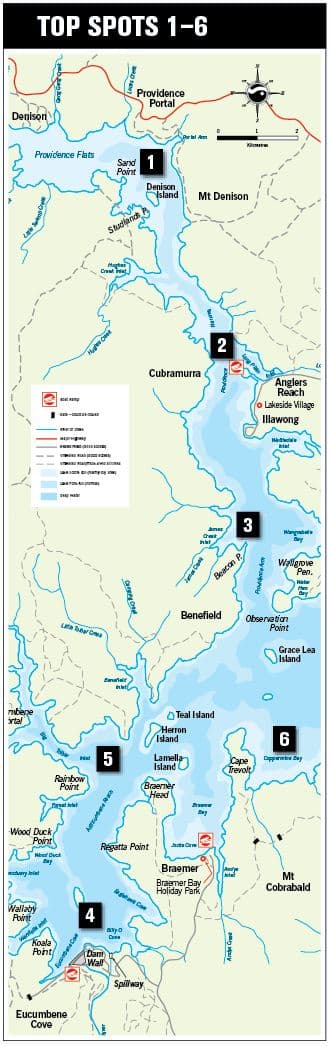
6 Coppermine Bay
Coppermine Bay is best accessed from the Braemer Bay boat ramp. This bay is overshadowed to the south by Mount Cobrabald. It is a productive area to flatline troll winged lures and like many trout lakes fish’s best when there is some ripple or chop on the water. When commencing trolling around first light I opt for greens, browns, and dark orange coloured Tassies. As the sun rises I tend to mix up the colours by adding a few brighter lures in yellow, fluoro green, and even white to my lines. Winter is also a great time to bait fish any of the shoreline from Coppermine heading east up to Collingwood Bay. Powerbait and worms produce the best rainbow captures.
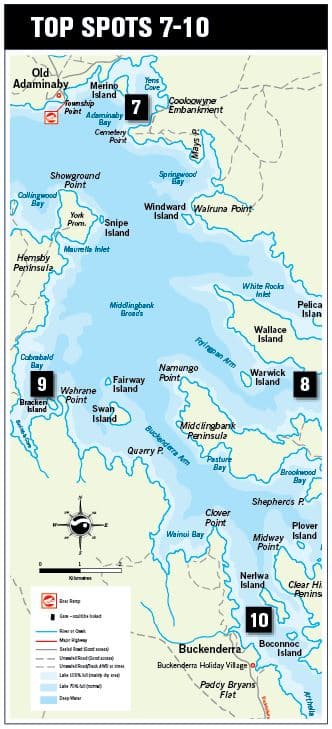
7 Yen’s Cove
Yen’s Cove is best accessed from Old Adaminaby and sits inside the much larger Adaminaby Bay. It is a top fly fishing bay with productive areas all the way around to Cemetery Point. It’s a top area to fish in northerlies or if the wind shifts to the east. Bait fishing with a mix of natural and artificial baits can result in good numbers of fish particularly around dawn and dusk. Late afternoons can produce some quality lure casting from a boat or shore. Best results come when there is some ripple or chop on the water. Hardbodies with a tight shimmy action when worked erratically will attract the interest of any big browns in the area. Further past Cemetery, to the east, is Springwood Bay where the trolling can be excellent on overcast days.
8 O’Neills Bay
O’Neills Bay is situated east of Wallace Island near the popular area of White Rocks. Access is via the Seven Gates Road, which will take you down to the water’s edge and open up a raft of landbased areas to fish. Bait fishing is the most common method and the results through winter over the past couple of decades support this. Flatline trolling is also possible for those with a car topper or small trailer boat behind a 4WD. Caution should be exercised when launching as the edges can become soft and boggy. Some of my best bait fishing sessions have occurred in this area with our bags predominantly made up of rainbows. As consistent as the rainbows are, almost every trip we will land a big brown so it pays to cast lures around while waiting for a bite on your bait rod. It should be noted that there is no camping allowed on the lakes foreshores around White Rocks, O’Neill’s Bay, and Wallace Island.
 9 Cobrabald Bay
Cobrabald Bay is one of the more remote locations on the lake and does not receive the same fishing pressure that many other areas do. For this reason it can produce some excellent trout fishing. Situated on the western side of the lake means it is well protected from wind from the south or east. I generally fish the bay after launching at Buckenderra Holiday Village. Trolling a variety of lures at different depths will allow you to work out what depth the fish are holding in. With two anglers in the boat I use Tassie Devils on two flatlines, a diving hardbody that will track at two metres on another flatline, and a small, shallow diving hardbody on a lead core outfit. This combination has proven over the years to take both browns and rainbows of good quality.
10 Buckenderra
The Buckenderra Arm between MIddlingbank and Wainui Bay is a great trolling area. In late winter it pays to get in tight to the shoreline and hug the bank through the middle section of the morning so that your minnow lures are right in the feeding zone. Trolling around Nerlwa Island is also productive, providing you use long lines, of approximately 40 m, out the back with shallow running minnows. There is productive fly fishing south of the island inside Boconnoc Island where the water is shallow over fertile weed beds. Yabbie patterns and large wets account for numerous quality browns every winter.
There are plenty of other areas I would have liked to have included but I have condensed it down to just ten. A week is not long enough at a lake the size of Eucumbene so my advice would be to select an area of the lake and fish it exclusively for a couple of days. On your next trip look for another area, and like thousands of other trout fishers around the country, you will quickly find your own favourite spot on Lake Eucumbene.
Andrew has been fishing the Canberra, Monaro, Snowy Mountains and south coast of NSW region for almost 40 years and is considered one of the country’s most innovative and competent anglers. He has been a freelance journalist for almost 17 years, has written two extensive books on the region, and featured in numerous AFN tactics DVDs. He regularly undertakes all forms of fishing with casting soft plastics for trout, chasing kingfish from the rocks, pelting baits from beaches, and luring his local estuaries amongst his favourite pastimes. Andrew is currently a Pro Angler with Jarvis Walker Australia and endorses their range of products.