Noal Kuhl takes his yak to the rural heartlands of the Darling Downs
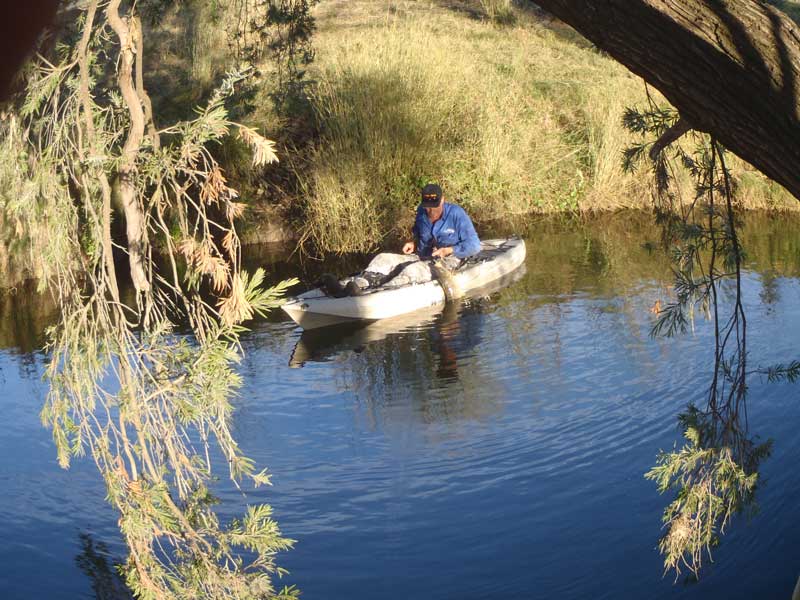
Smaller creeks on the Downs may require kayakers to move about freely without the hassles of gaining permission providing you don’t exit the craft to walk the banks. Pulling up to structure and lure casting or bobbing with bait are one of the many rewards when kayaking.
Lately I’ve been driven by the versatility of kayaks and their application to the Downs waterways and the smaller impoundments located within. Hard line boaties are also realising the benefits, particularly with no insurance or extra registrations to pay, although some of the upmarket kayaks with electric motors and other expensive gadgets make you wonder if it really is worth down sizing when a fully equipped boat brings some roomy comfort.
RIVERS AND CREEKS
Having a lightweight craft in skinny waters on the Downs waterways creates many advantages over powered boats or those walking the banks. An increased number of launching sites also makes kayaking a more attractive proposition here. Searching for native fish in remote locations increases the pleasure spent on research time and there are public reserves and roadside bridges where kayaks can be launched from for day outings without treading on private land. In saying that, negotiations with a landowner can help out with access. The narrower tributary creeks require much exercise to hop over blockages, although I am referring to the Condamine River where several sections can be paddled from accessible areas at Chinchilla, Dalby and Brookstead outskirts, Cecil Plains, Nobby and Warwick.
Kayaks allow for casts to be made perfectly into the strikezone among the submerged and visible timbers without fear of loss due to easier access to reclaim snagged lures. Many areas of the Downs waterways are under riparian rehabilitation and it is by these projects alone that we are witnessing a resurgence of native fish numbers similar to that experienced by anglers of yesteryear. Fencing off bank access to cattle, replanting of trees and erosion control are reversing the downward spiral of native fish stocks.
Most anglers will travel to the local dams although Bowenville Reserve and Chinchilla Weir have limited facilities with excellent access upstream from the boat ramp to fish. These areas have undergone a face lift in recent years with improved riparian zones and re-snagging. The Bowenville area has turned into an overcrowded pincushion from re-snagging projects. Native fish have returned to this redeveloped estate and frequent captures are rewarding visiting anglers. I have found that no particular location on the creek or river proper shows as a favourite, although I am somewhat surprised at what meagre habitat offerings the native fish are calling home in some locations.
With over a million native fry pumped into the system, lodgings are at a premium. The quality of bank side vegetation can play a key role to searching out the potential native fish haunts. A mixed native fish population is spread evenly throughout, so targeting a particular species may require extra attention. This is where the local stocking group has to be commended for creating a native species stocking formula for a balanced fishery.
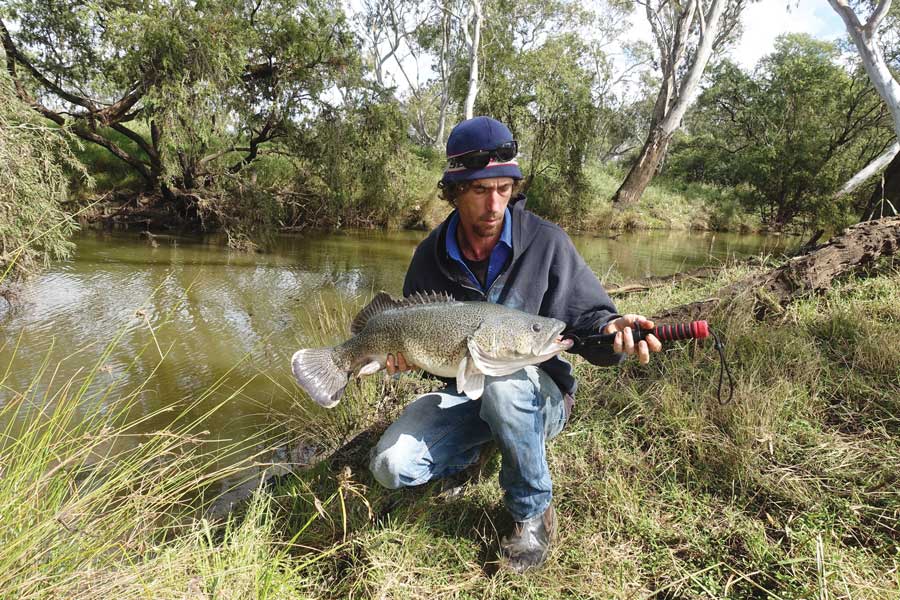
Larger specimens of native fish are commonly found in restocked areas with Murray cod up to 20 kg being extracted on regular occurrences while most numbers are still bordering on legal size. Silver perch are also gaining a foothold with the odd fish registering 46 centimetres. Golden perch average around the 35 cm mark with a 7 kg specimen the current record to beat.
 DOWNS IMPOUNDMENTS
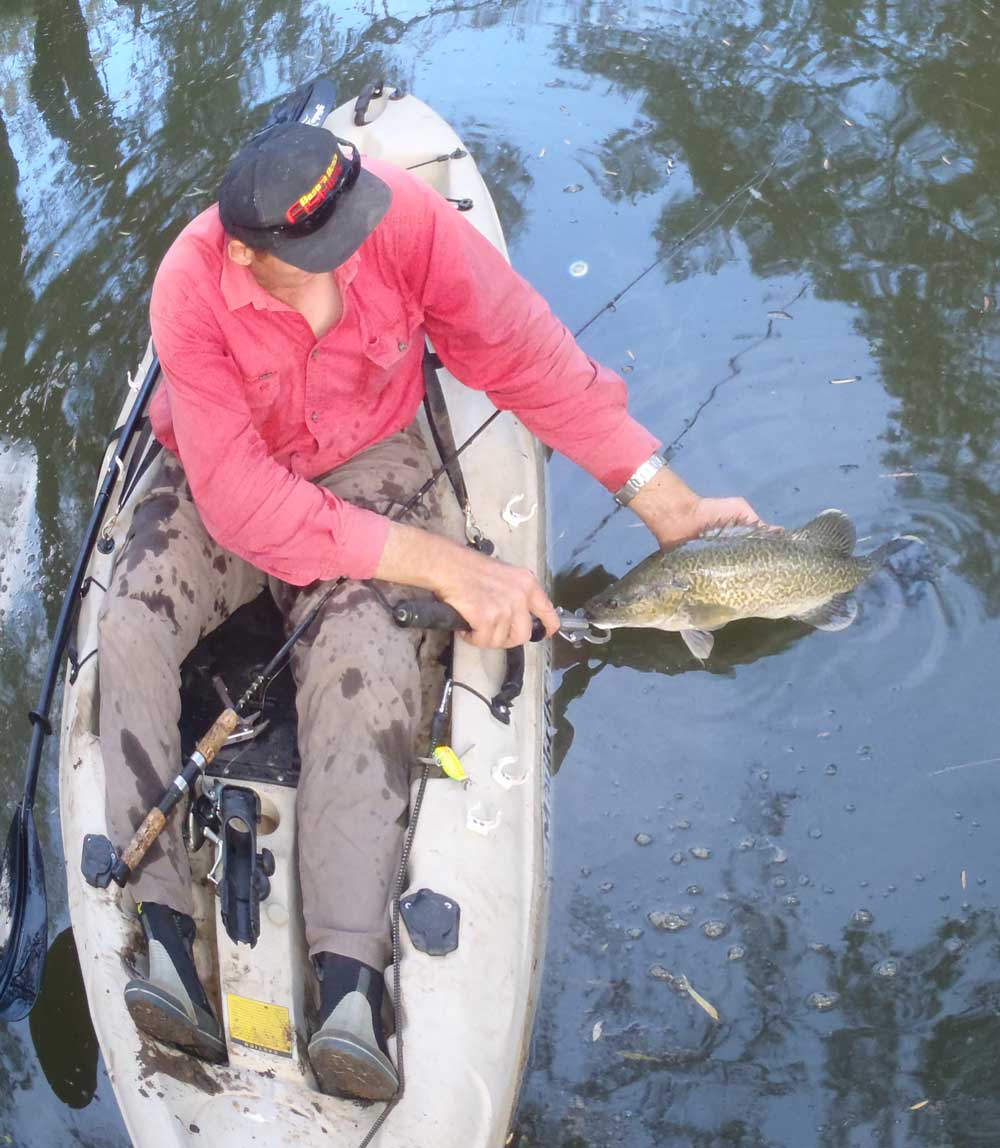
Man made water storages on the Downs like Leslie, Cooby, Connolly and Coolmunda commonly lack this improved submerged timber architectural blueprint for angling success as dollars count – flooding trees below spillway height on construction had to suffice. Fish in impoundments aren’t fussy and when meagre accommodation is available outside main creek beds, the telephone pole arrangement structure is better than a liquid void.
ANGLING FISH RICH WATERS
Practical gear works to your advantage in the snag infested ghettos here. The waterways of the Downs are well suited to monofilament lines with breaking strain of 12 kg with heavier leaders required.
I mainly use mono line in freshwater as it stretches and can be more forgiving on a rod while untangling in underbrush. Around 12 kg breaking strain can land a quality cod as well as deal with the external obstacles. As customary with Cooby and Connolly dams where the water is gin clear the fish are forced into the deeper retreats or cloaked under a mass of weedy shoals. Kayaking may limit the amount of gear carried but if you fish the Downs regularly, a small box containing half a dozen lures, several rods with lip-gripper, pliers and drinking water is all that is required.
Casting plug lures – usually purple – or a green frog pattern next to structure increases the opportunity to catch native species like (on spinnerbaits), golden perch and silver perch that hide among fallen debris and lie in ambush. Open terrain bait fishing invites the pesky carp to hook-up and at times there can be no shortage of carcasses stockpiling the creek banks, although from a kayak they are fun to catch. Jigging lures are also becoming popular among kayakers due to the success of catches and being able to get the expensive models back from snags.
Rod Schull, a local spinnerbait lure maker from Chinchilla, produces a great range (Stingerbait spinnerbaits) to suit local conditions and will make personal outfitted Stingerbaits as well. Local knowledge can’t be beat. I usually allow the spinner to drop close to the bottom before reeling in with a slow, steady retrieve that borders on stalling the blades’ rotation. A good guide to the depth that spinnerbaits sink is about one foot per second regardless of whether you are using ¼, ½ or ¾ oz weights.
-

- Downs waterways can enable kayakers to move about freely without the hassles of gaining permission providing you don’t exit the craft to walk the banks. Scotty Vlietstra stretches his legs on the public reserve at Bowenville and lure casts to snare an amazing quality cod that are becoming a common sight due to the rehab work.
-

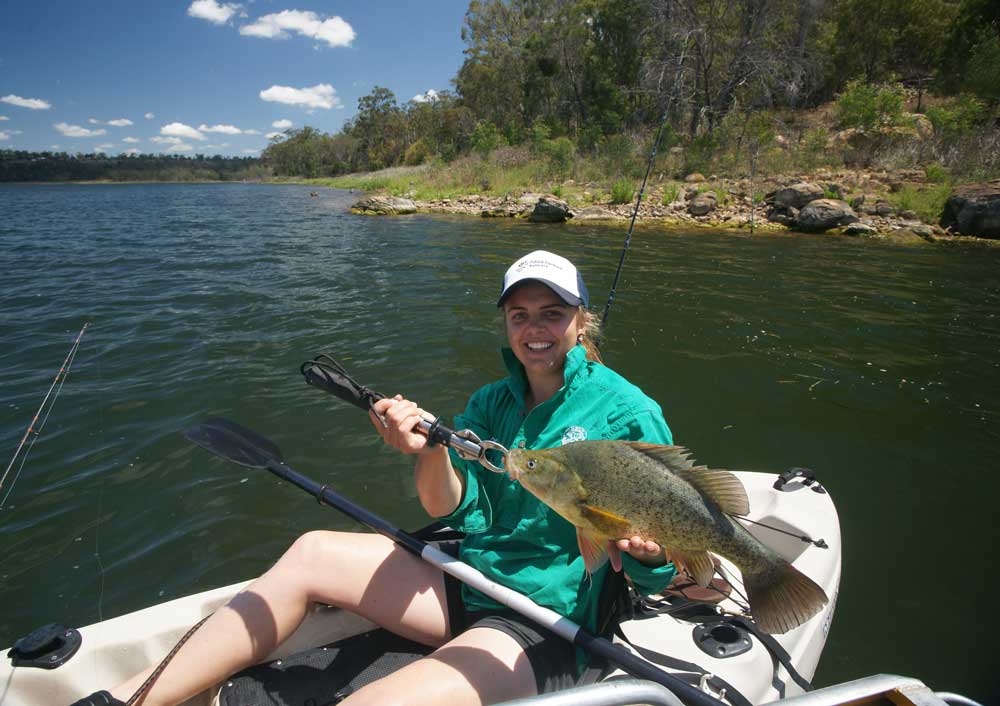
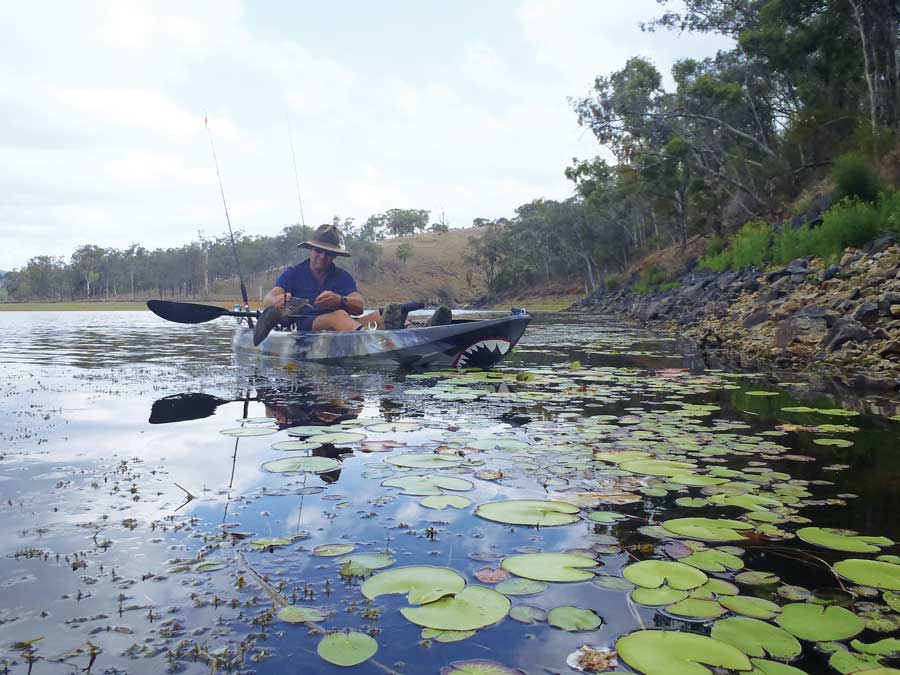
- Getting about on kayaks in the smaller Downs lakes is popular due to quick access to remote locations away from the land based angling foreshore that is associated near boat ramps. The emergence of small watercraft onto dams has many benefits to which locals up here like Mark Weber are wising up to quickly.
SUMMARY
Since settlement in the 1840s riverine angling techniques of applying live bait to fishing line is being superseded by lures and their use from kayaks. Many rivers and creeks across the Downs are being exposed to the modern angler who boasts having a collection of jigging, spinnerbaits and plug lures. For me the reward from kayaking is about seeing the rehabilitated riparian zones and other kayaking angling pursuits, enjoying what’s on offer away from the noisy public access points.
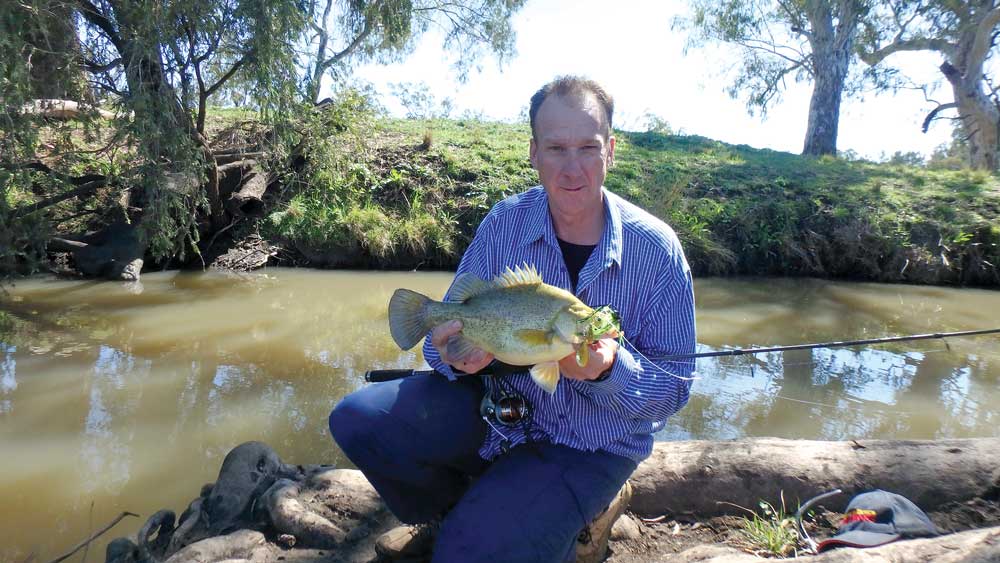
atching native fish in newly rejuvenated riparian zones on the Downs are the rewards for anglers
Noal Kuhl has had articles featured in FWF for 20 years. He has been involved with the Oakey Freshwater Fish Stocking Assn for 22 years where he served as Secretary for 18 years. He was also on the FFSAQ committee (Freshwater Fishing and Stocking Association of Queensland) for several years and a member of the Condamine Alliance Rehabilitation Steering Committee, which involves Qld Fisheries, rehab scientists and the Condamine Alliance resources team which has expanded the rehab work on the Downs waterways to over 110 kms so far. Noal started doing his own private riparian zone rehabilitation research and actively re-snagging the Darling Downs waterways for 12 years prior to receiving any government agency assistance and on three occasions visited Qld Parliament House lobbying for a perpetual environmental flow for the Condamine Basin headwater streams below Toowoomba city. Starting in 2007 Oakey Creek was the first location in Qld chosen for a 1 km riparian rehabilitation project at Bowenville Reserve. For this ‘Dewfish Demonstration Reach’ project, Noal was a part of the team that won the 2012 River Prize Award, the 2012 Banksia Sustainability Award and the 2013 United Nations Assoc of Australia Biodiversity Award and he also received an individual Australia Day Award for his contribution to fish stocking on the Darling Downs.