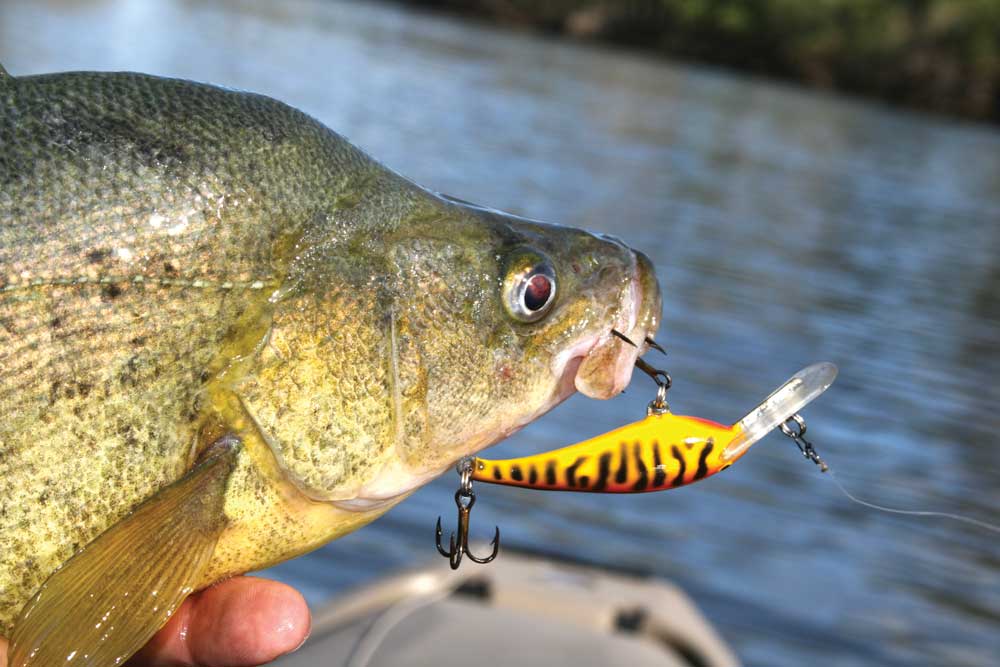
Dave Magner explores the freshwater reaches of the Burnett River that provide a wonderful change of pace for coastal kayakers.
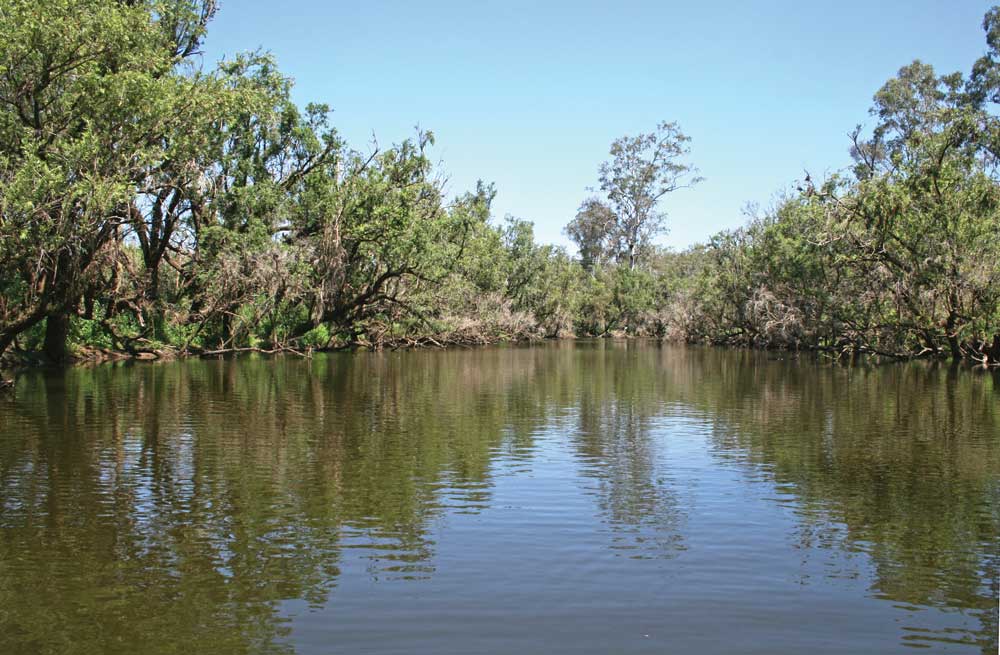
Barambah Creek out near Murgon is an important feeder stream for the Burnett System. Thanks to the floods, it now holds excellent stocks of bass and other natives.
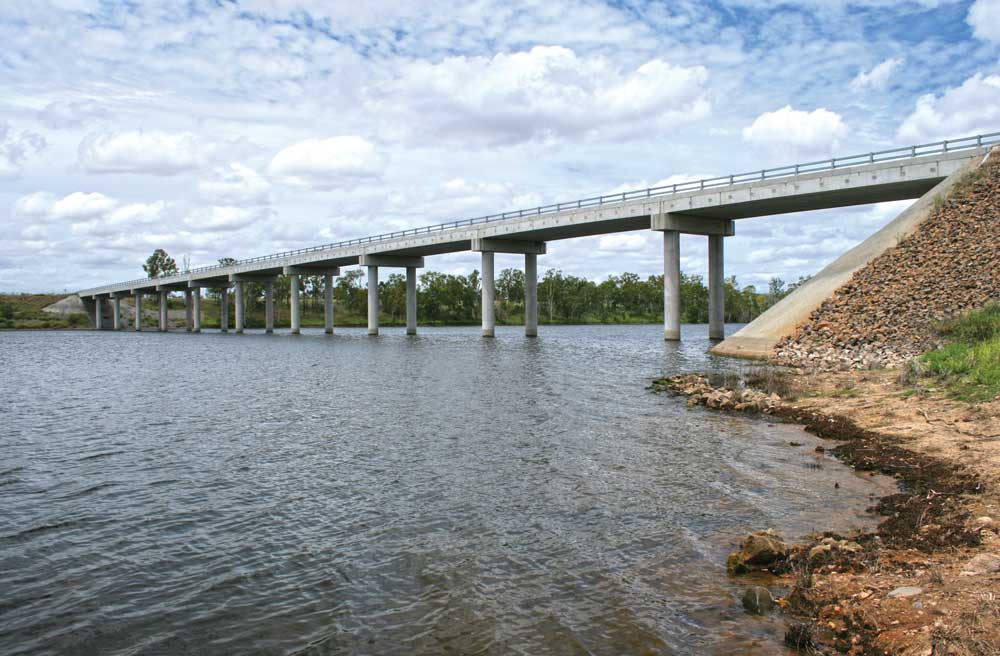
Taking in something like 20,040 square kilometres, the catchment of the Burnett River is the third largest on Queensland’s east coast. Beginning life way up in the hills behind the quaint country town of Monto, the Burnett flows roughly south past Eidsvold and Mundubbera, before swinging to the east alongside Gayndah and Wallaville. Then after neatly bisecting the rum city of Bundaberg, it finally greets the ocean at the aptly named township of Burnett Heads.
The major tributaries of the Burnett include Three Moon and Barambah Creeks, as well as the Nogo, Auburn and Boyne Rivers. There are also several well-known impoundments within the catchment, including Boondooma, Cania, Wuruma, Bjelke-Petersen and Paradise dams. That’s a lot of water even without taking into account the numerous other smaller weirs and barrages which hold back the river along its journey.
If you leave the major impoundments out of the equation, there is little doubt that the bulk of angler effort in the Burnett is concentrated in the saltwater section of the river. Even though there’s only something like 20 km of tidal water between the last barrage and the open ocean, it’s here that by far the majority of anglers can be found. Sure, there are a few water skiers and general pleasure boaters scattered all along the river, but it’s still not a lot of fishing effort in comparison to the number of craft which ply the river between Bundy and the river mouth.
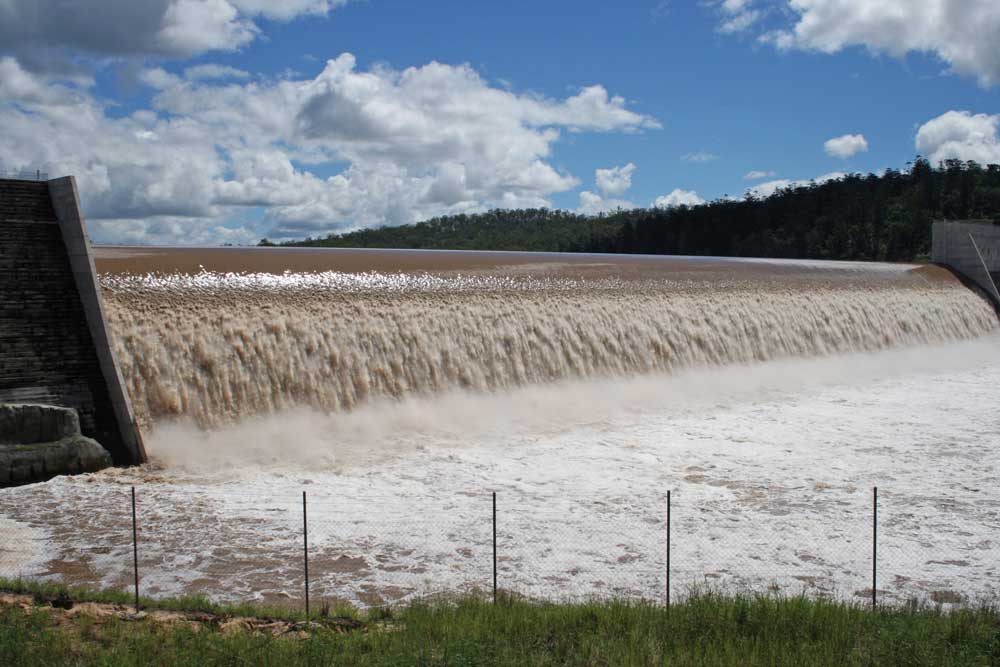
I guess the main reason the freshwater reaches of the Burnett have largely been ignored by most anglers is that the majority of people believe that there’s nothing but catfish to be found there. While it’s certainly true that catties abound in the Burnett, there’s also been a long history of fish stocking along the river’s length and this means the river actually holds quite a number of desirable species to target. What’s more, the floods of recent summers have done a lot to aid freshwater fishing in the Burnett and the rest of the state for that matter. As countless megalitres flowed over spillways right across the state, untold numbers of bass, yellowbelly, saratoga, and barra went with it, spreading the fruits of a decade of fish stocking throughout Queensland’s rivers. Such a movement of fish has probably never been seen before and it could be a long time before it happens again.
Truth be told, unless there is a major flood event like the one we experienced a couple of summers back, our dams are disgracefully ineffective at allowing fish to migrate any sort of distance. Even new dams like Paradise, with all the environmental concerns which were raised ahead of its construction, appears to have been just another impediment to fish migration. This lack of access is a sad state of affairs which nobody is willing to accept responsibility for, or seems overly concerned on rectifying.
Despite the hurdles we put in their way, the aquatic environment is full of opportunistic creatures and since the big floods, evidence has surfaced of fish moving enormous distances. One determined bass for example, which was originally tagged in Wuruma Dam, travelled just under 300 km only to get caught right down the bottom end of the river near Bundy. That particular fish had negotiated two dams and three weirs in its efforts to breed. Let’s hope it wasn’t a wasted trip after such an epic adventure.
On the other hand, the floods also threw up some real surprises. Believe it or not, a substantial freshwater crocodile was recently discovered in the Burnett River by Agriculture, Fisheries and Forestry officers while they were electrofishing in Jones Weir near Mundubbera. The reptile was close to a couple of metres long and is believed to have been living in the local waterhole for some time before being captured. It was certainly in good condition and didn’t seem to be suffering any ill effects from living around a thousand km south of its normal range (freshies are supposedly not found south of Mt. Isa).
A river of extremes
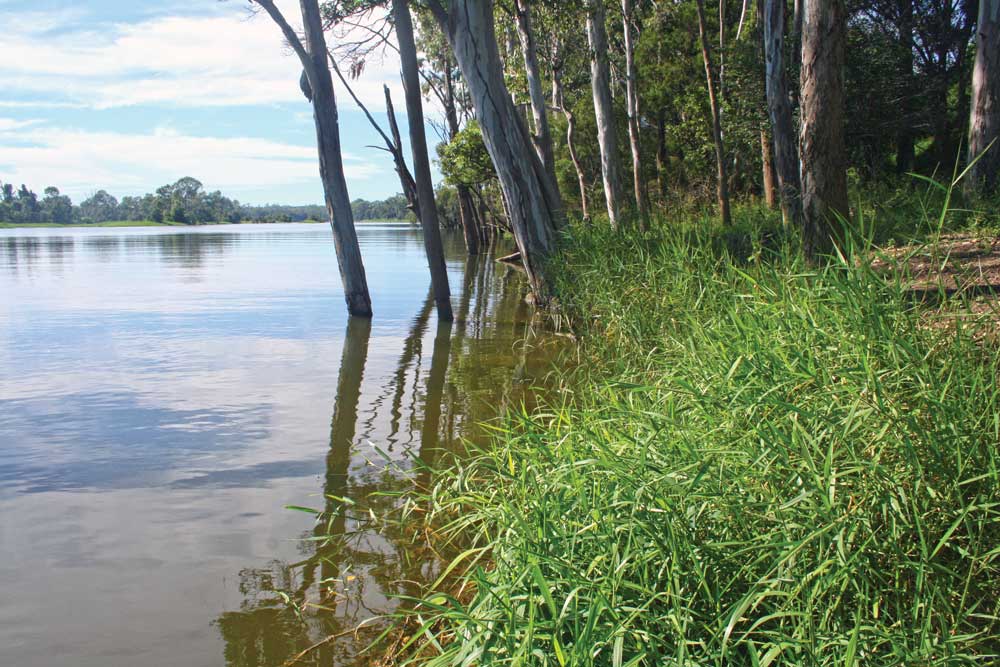
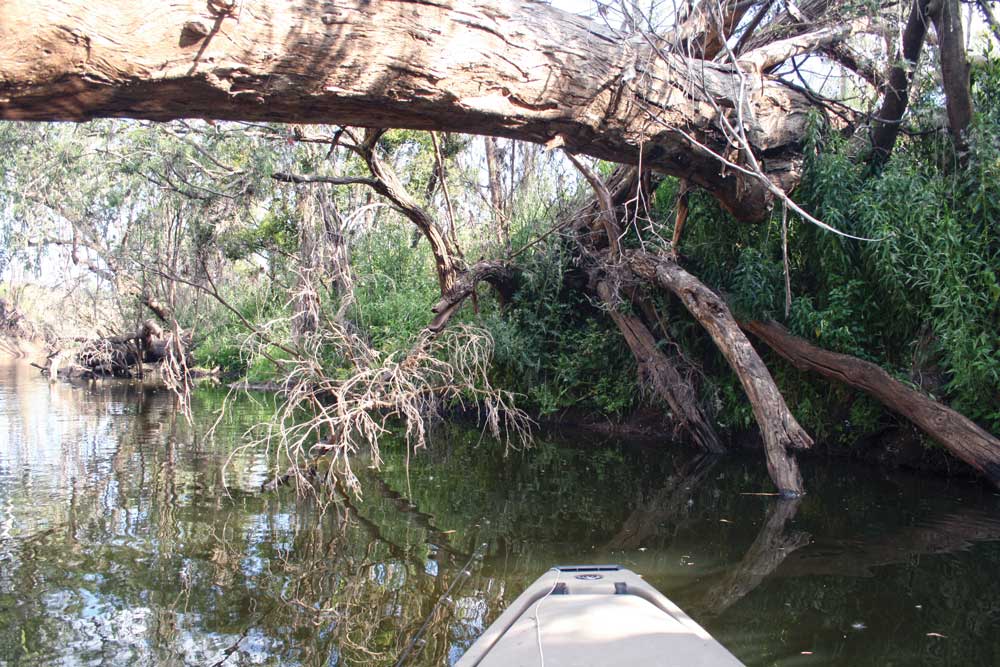
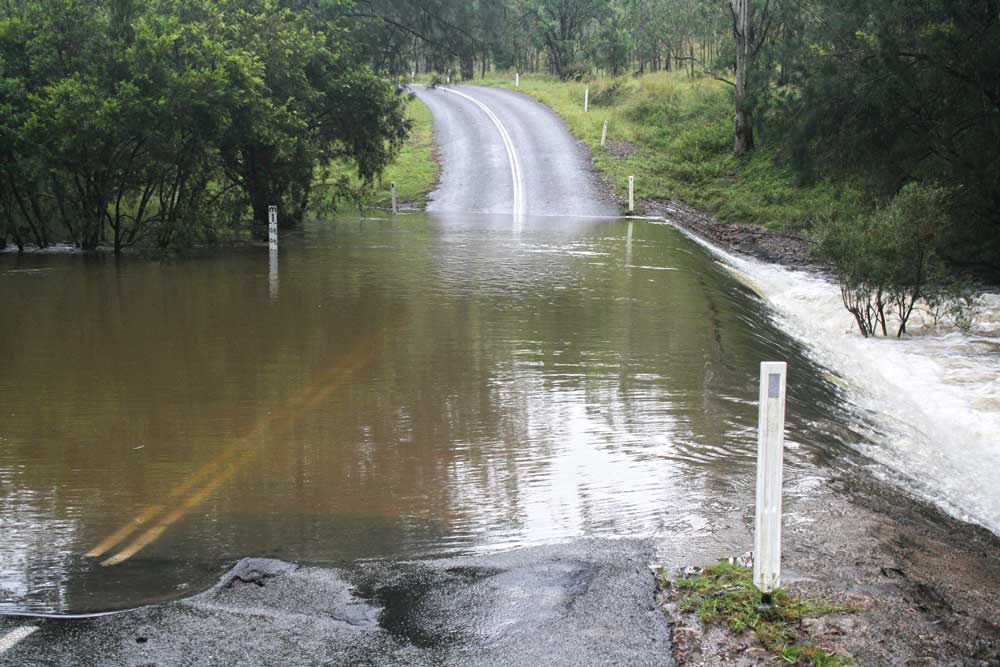
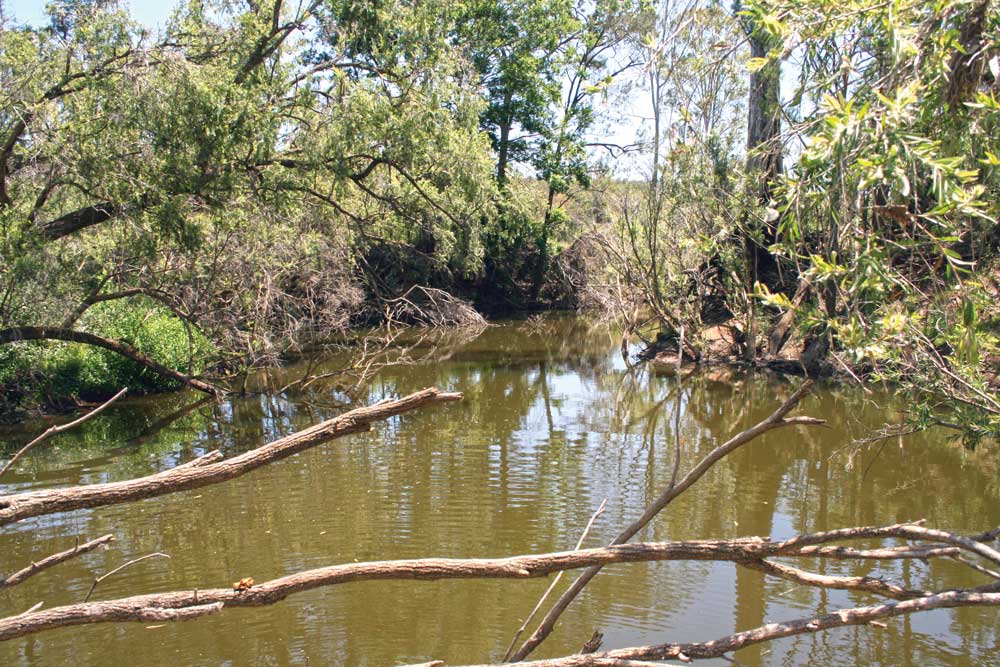
The Burnett’s catchment takes in a region of vast extremes where long dry spells are interspersed with infrequent periods of heavy rain and high water flow. It’s these powerful flood events which have shaped the landscape by carving out spectacular gorges and leaving towering escarpments to stand guard over the river’s course. Along the water’s edge, the steep rocky banks are covered by a layer of hardy native scrub and in places you will find unexpected surprises like giant boab trees clinging resolutely to hillside. Even in good times, the surrounding landscape has a ‘harsh’ and arid feel to it, which only serves to intensify the life-giving nature of the river itself.
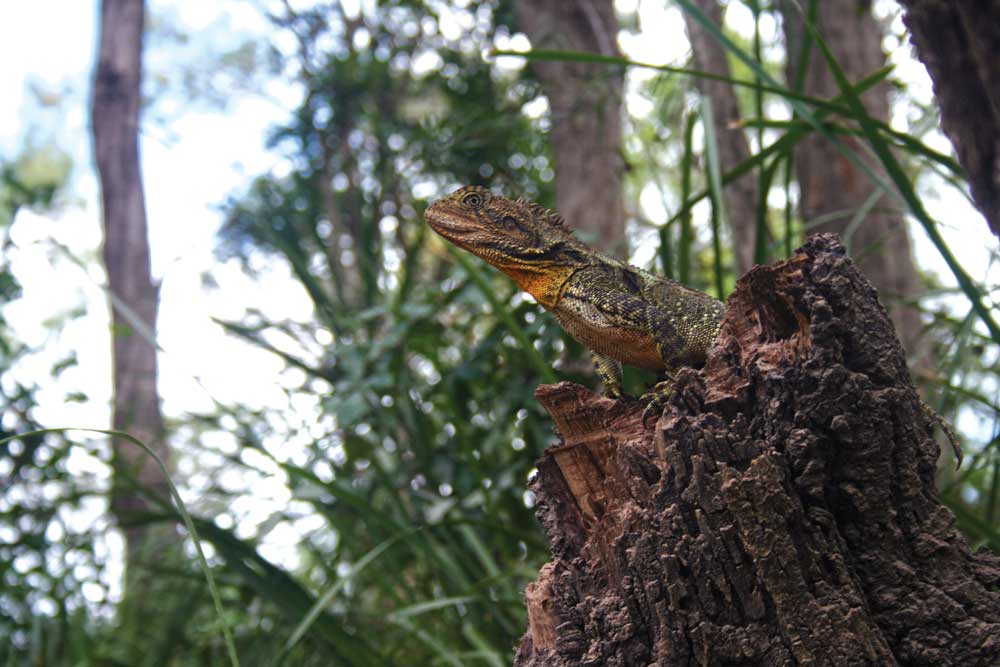
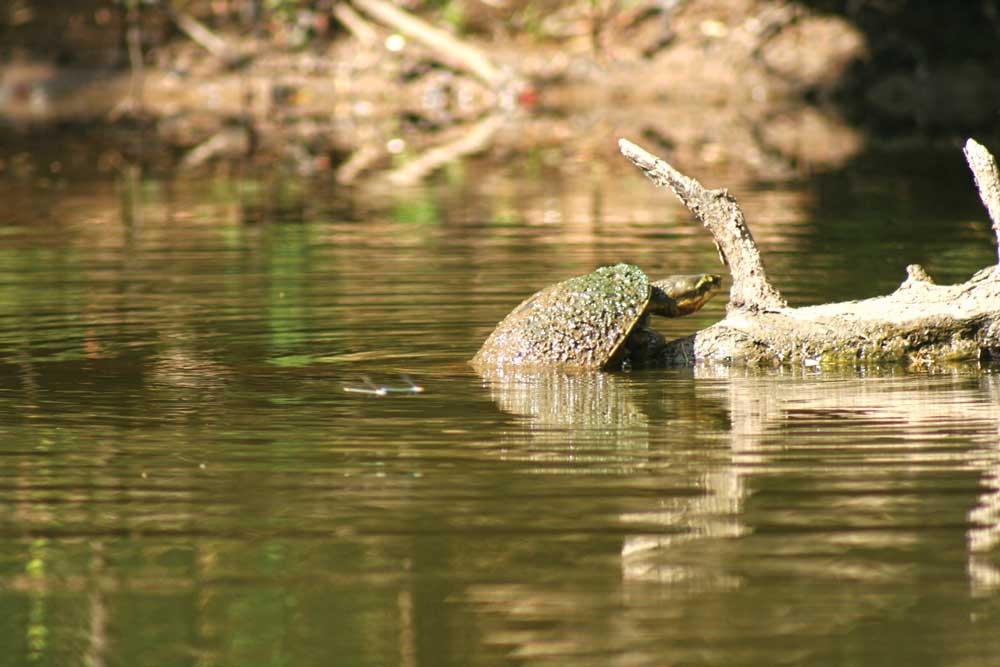
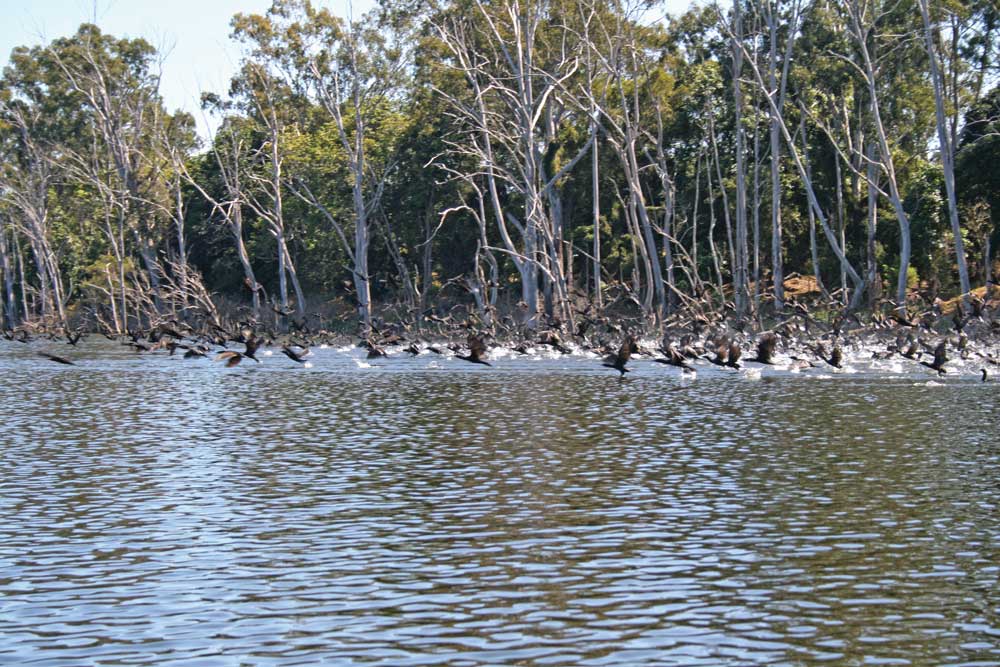
In fact, it’s hard not to be impressed with the amount of wildlife along the river. The first thing you’ll notice are the birds, which are everywhere you look. From eagles soaring majestically up above, to tiny little wrens flitting about in the undergrowth, there’s a constant parade of colour and motion to catch your eye. Then, if YOU move cautiously, the river’s shyer residents will emerge. Lizards and tortoises are particularly plentiful, while playful platypus can often be observed scouting along the banks. Actually it’s not unusual to be treated to the sight of several of these normally reclusive little critters on a single trip.
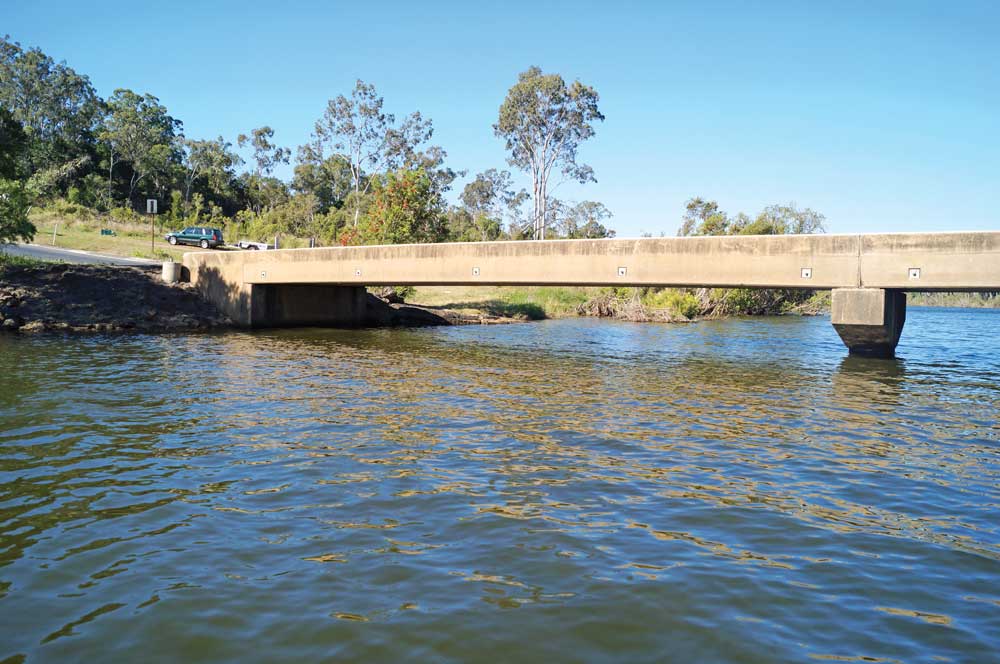
Despite being a fairly large waterway, over the dryer months, much of the Burnett shrinks back to a series of waterholes. There’s still some flow of course, with the river seeping from one hole to the next but essentially it’s really more a series of pools, rather than one long, flowing river. Most of the pools are fairly substantial, often up to several kilometres in length but fishing this part of the Burnett means picking a hole and working it over rather than racing long distances up and down the river and that suits kayaks and paddle powered craft right down to the ground.
Of course, knowing which section of the river to fish is where the trick comes in. Some pools fish better than others and some are much easier to get to. I generally find that the harder a pool is to access, the more productive it is likely to be. Of course, if there’s no formed launching ramp then there’s also little likelihood of having to put up with outboard powered boats which has to be a good thing for yak fishos.
Fish species
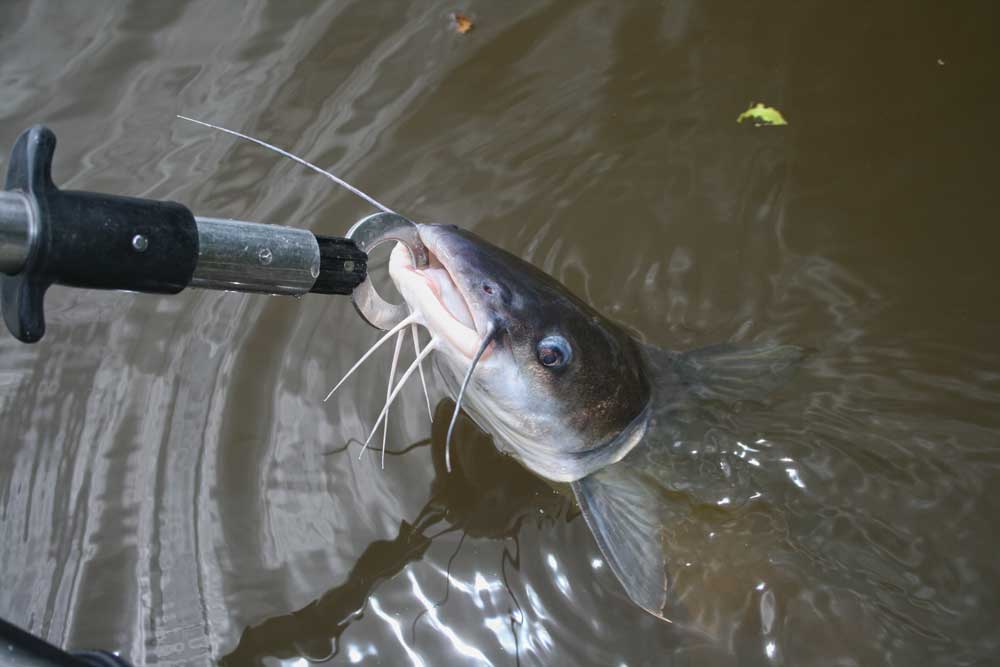
As I mentioned earlier, the upper sections of the Burnett have really benefited from the floods. With Bjelke-Petersen, Boondooma, Wuruma and Cania dams all situated in its catchment, any of the species which have been previously stocked into the dams are now likely to be found in the river itself. That means barra, bass, goldens, silvers, eel-tailed catfish, sleepy cod, saratoga, tarpon and garfish are all possible targets. Of course, the ever-present fork-tailed catties are still not in short supply either and while they’re not usually an intended catch, the larger ones put up a great fight and will keep you amused between hook-ups with the more desirable species. Just be sure to handle them carefully and release them as gently as you would any other species.
Bass of the Burnett
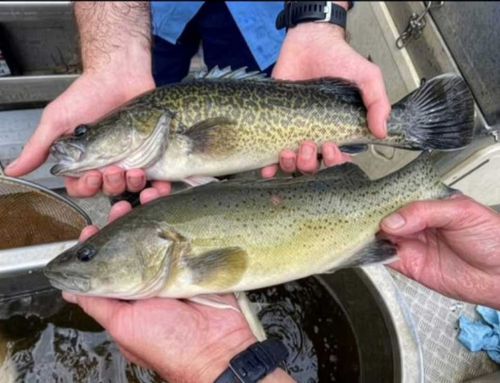
These bronzed battlers are undoubtedly the most popular of the recognised target species in the Burnett and any of the lures and techniques used to chase dam fish will work on their river dwelling cousins. Probably the easiest approach is to toss spinnerbaits, as these wire framed lures are relatively snag proof and are eagerly accepted by the fish. Spinnerbaits are reaction type lures, and with river fish being accustomed to pouncing on food as it gets washed past, this type of presentation is highly effective.
Given the choice, I prefer to fish with hardbodied lures and these are also highly effective on Burnett River bass. Any of the proven bibless rattlers like Jackalls and Cordell Spots will do the trick and it’s just a matter of lobbing them close to the timber, allowing them a brief moment to sink and then slow rolling them back to the yak.
Whichever presentation you favour, make sure you hang onto your rod. Burnett River bass may be fewer in number than in some other waterways but they are often impressive in size and they hit lures with authority. There is clearly no shortage of food for them in the river either as they typically exhibit bulging stomachs and they fight with real tenacity.
Generally the best bass fishing in the upper Burnett is in those stretches of river or creek directly below dams like Bjelke-Petersen or Boondoomba and numbers tend to decrease as you get closer to the coast. Barambah Creek (near Murgon) can be a real hotspot and is fantastic yak fishing water which more anglers should get to experience.
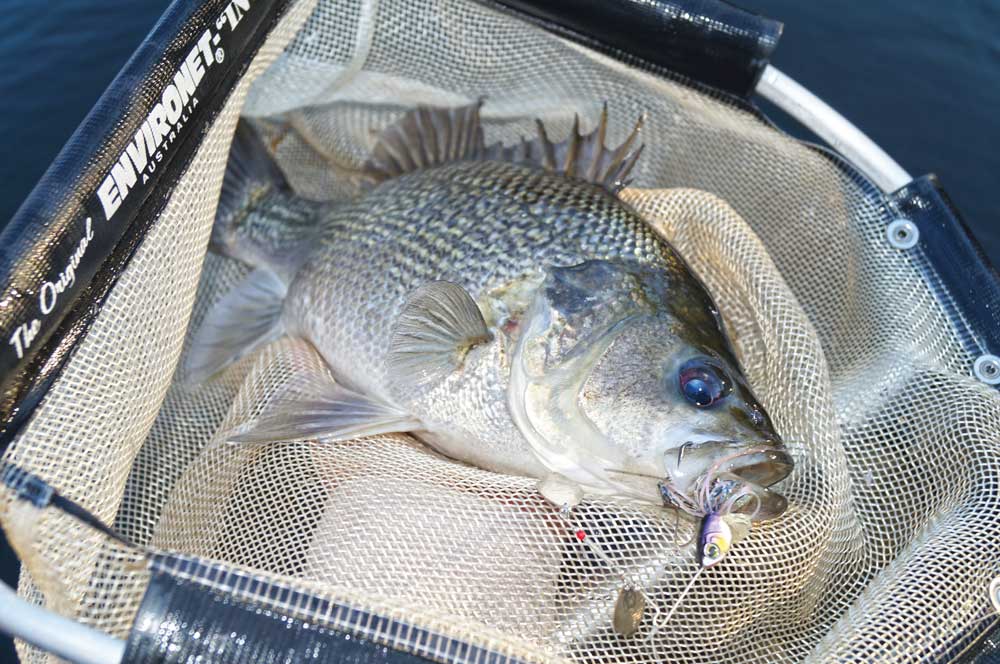
Spinnerbaits are one of the best options when bassing in the Burnett.
Golden Perch
Goldens are certainly less common than bass but can be taken if you know where to look. They can often be found holding out in the middle of the river rather than tight up against bankside structure which means they can be trolled up on diving minnows and plugs. Again, Barambah Creek is a good part of the catchment to fish for yellas but the river below Paradise dam also has a surprising number of these popular natives.
Goldens in the Burnett are from the Dawson strain. In general, while they don’t tend to grow as big as their Murray-Darling Basin cousins, they can still give a good account of themselves. When casting lures, I find soft plastics to be very effective and the addition of a little spinning blade also seems to help your chances.
Barra and Saratoga
While there are more barra in the Burnett than most people probably realise, they are still a less than common catch. Unfortunately the same floods which freed them from the dams seems to have carried a lot of them right out to the salt. If specifically chasing barra, I’d probably concentrate on the river somewhere between Paradise dam and the start of the saltwater.
As for ‘toga, well they’ve also hardly had the chance to become common yet due to their slow reproductive rate. That said, stocking has increased of late and the river both upstream and downstream of Paradise dam or Three Moon Creek would probably provide the best chance to find one.
All the rest
While silver perch, eel-tailed catties and sleepy cod are not regularly targeted by lure casters, bait fishing can be quite successful for these species. The only problem is you’ll catch a stack of fork tailed catfish for every one of the others you encounter, so most sportsfishers don’t seem to bother. At least these species seem to be spread right throughout the river system and anywhere you can toss a bait can occasionally yield an unexpected but very welcome surprise.
Come paddle the Burnett
While the freshwater fishing in the Burnett is probably not the sort of thing which you would drive from one end of the country to the other to experience, it does have its charms. The river is generally slow flowing and easy to paddle and with the ruggedly beautiful scenery it’s all too easy to relax and unwind while tossing a few lures around a shady freshwater pool. As a bonus, you can never be sure what sort of wildlife you’re likely to encounter and that’s enough to make any trip worthwhile.