By Nigel Webster
As the winter cold sets in, many Queensland offshore anglers get excited about the prospects of some great reef fishing. Species such as snapper, pearl perch and red emperor are often at the forefront of these thoughts. The cold starts are often worth the exciting fishing and succulent table fare when winter sessions meet with success on these species. The other side of the equation is when you get cold and wet while failing dismally to catch some of those sought after creatures! I have, however, had plenty of those tough winter sessions salvaged by a special little species that flies well below the radar and is a nicely kept secret by many in my neck of the woods.
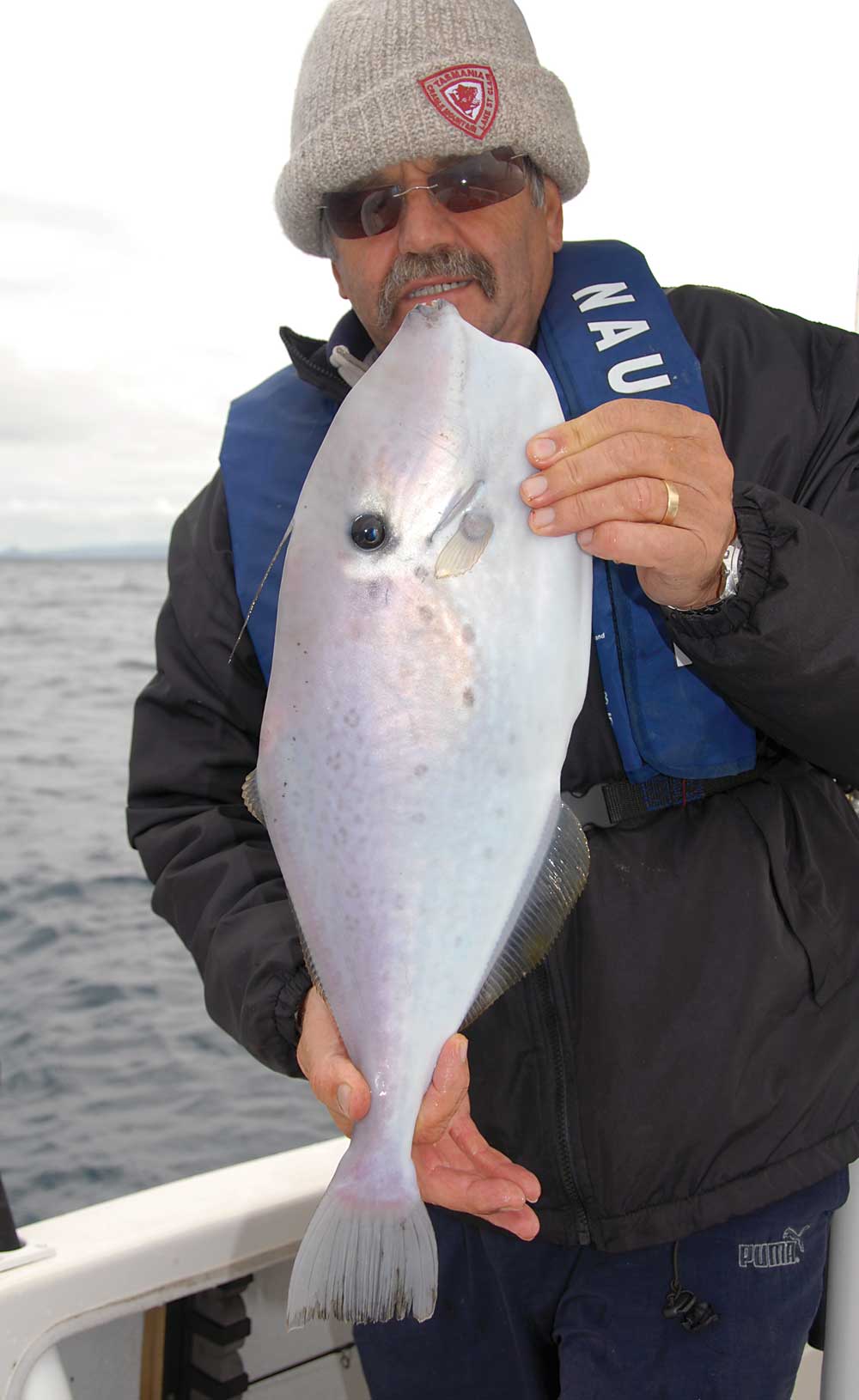
Leatherjackets are an avidly targeted fish in areas south of Queensland. They are abundant, relatively easy to catch and super tasty once you know how to catch and clean them for the table. If there is one complaint about leatherjacket, it is often that they don’t come large enough for some anglers to bother targeting. It so happens that in Queensland and areas south of the border we are fortunate to have access to one of the giants of the family by way of the unicorn leatherjacket. Having turned my hand to catching them on days when the snapper wouldn’t play, I have found some fun fishing combined with an abundance of tasty white fillets to return home with. It makes it that little bit easier to justify to my wife why it was that I used that fuel money!
Species
The unicorn leatherjacket frequents tropical marine waters and is known to grow to over 70 cm in size. Experience suggests that in south east Queensland waters these fish are most prevalent in winter when they creep in to some shallower reef areas. Research suggests they live a pelagic style existence where they cruise around in water temperatures that best suit their comfort levels.
In the Brisbane area, they can be found in shallower reef areas when the water cools to its winter base temperatures around June to August. Many anglers are often blissfully unaware that these fish are hanging at the base of their berley trail, apart from the odd pitted soft plastic or occasional rig bite-off!
Background
I have often come across unicorn leatherjackets in my local shallow reef systems during winter. The first few times I caught glimpses of them hanging beneath the berley trail, I mistook them for other species such as pale looking snapper. It wasn’t until one ventured close enough to the boat one day that I was able to identify it as one of the leatherjacket / triggerfish family. My first impression was that it was a triggerfish, which are known to be a menace with regards to annihilating baits and rigs meant for other species. The creamy colouration and size of these fish had me perplexed. And, as I had seen them on certain reefs several times, I did some research to find out what they were. Having looked through the entire family tree of leatherjackets and triggerfish, I began to conclude that they had to be unicorn leatherjackets. As I also discovered they were very tasty, I decided to catch one next time I was on the water!
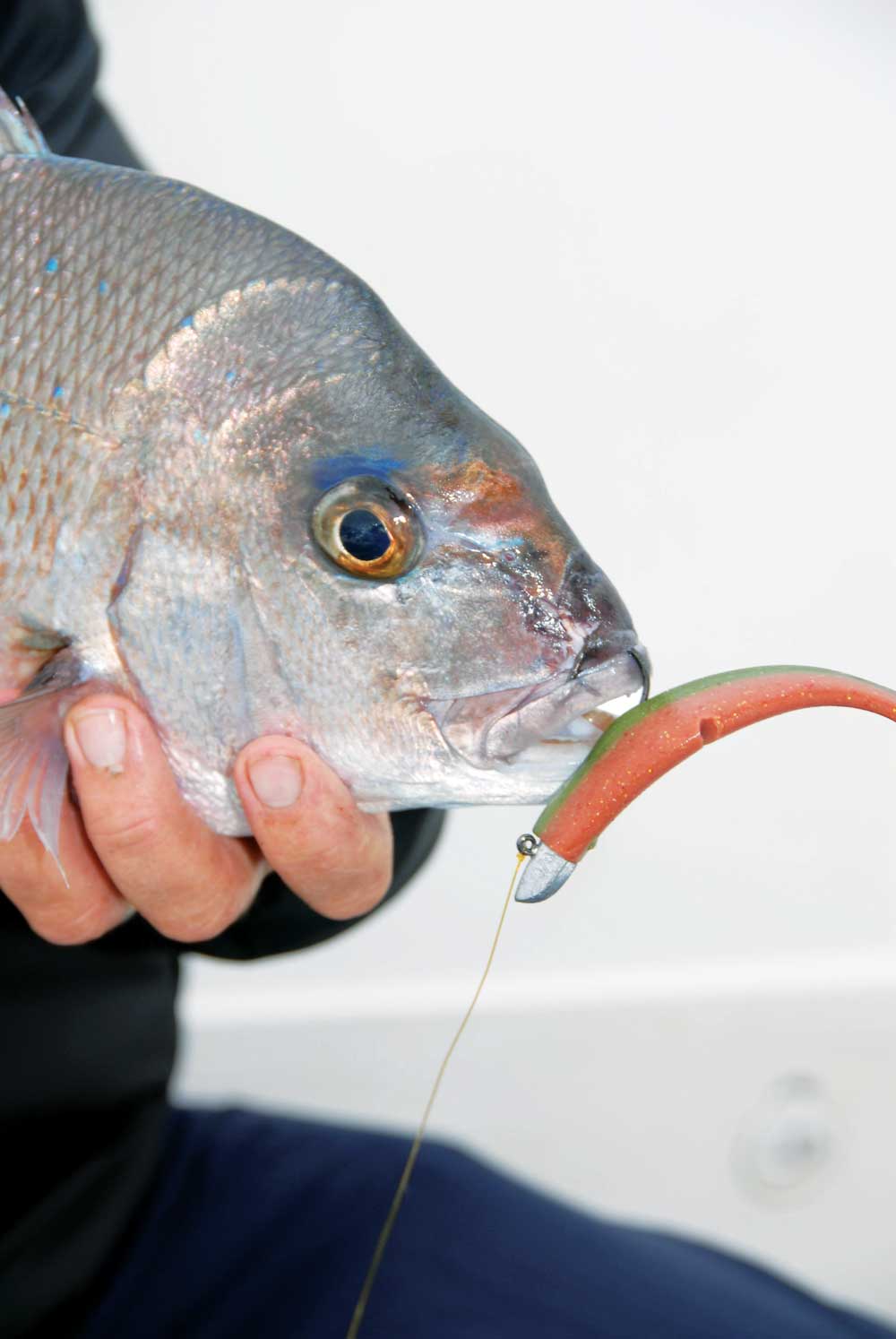
Unicorn leatherjacket will often hold in a berley trail meant for snapper. Note the pitted soft plastic – a sure sign of Unicorn presence before this snapper nailed the plastic.
Technique
Winter is obviously the time to start keeping an eye out for unicorns. As many of us often anchor off shallow reef areas, we are already in prime unicorn territory. In my opinion, shallow reef water is anything that approximates depths in that 5–20 metre range.
Any leatherjackets are suckers for berley. A trail of slowly sinking fish pieces is a sure fire way to bring any local leatherjacket to you. By keeping an eye on the water around the boat, you will often see fish begin to appear. When fishing slightly deeper water this may not always happen. However, by adapting your technique to put a likely sized leatherjacket bait in amongst the berley, you will quickly establish if these fish are present.
The main reason more of these fish aren’t caught in south eastern Queensland is that we simply don’t employ small enough baits and hooks very often. The leatherjacket has a small mouth and can be shy of heavier lines at times, which means a specific rig must be used to target them. I often have my live bait rod in the boat to provide a dual purpose outfit. It satisfies my bait gathering criteria and doubles up as my leatherjacket outfit should the fish show up. It is an estuary sized spin rod in a 3–5 kg rating. I marry it with a 2500 size spin reel that is loaded with 10lb monofilament line. This inexpensive outfit is perfect for chasing unicorns!
The rig for catching these fish is about as simple as bait rigs get. I often tie on only a single hook and use the weight of the bait to drift the rig down the berley trail. If there is some current running, I sometimes employ the use of a running sinker slid directly on top of the hook. This rig enables the bait to sink to the same depths as the fish pieces within the berley trail. My favourite hooks for targeting unicorns are the Mustad range of long shanked whiting hooks in size 10 to 8. The rodent-like teeth that leatherjacket are equipped with, quickly snip through a monofilament line. The long shanked hook prevents the incidence of bite off dramatically!
Having established a berley trail, slice up small strips of pilchard that match your hook size. Rig your bait and pull the flesh up over the eye of the hook to hold it in position and then simply drop the bait over the edge and free spool the bait down the berley trail. Continue to feed line from the spool as the bait sinks deeper down the berley trail. At any stage that the line stops moving or suddenly speeds up it indicates one of these critters has picked up the bait. Retrieve slack line, lift the rod to set the hook and you are away! These guys will battle persuasively, and I have dropped several that surprise with a turn of speed. Use light drag settings and slowly retrieve the fish to the boat.
Table preparation
Leatherjackets have a unique form with which many anglers are unfamiliar. Preparing a leatherjacket for the table is easy fare, however. By following the backbone of the fish, a fillet can easily be removed. Having removed the fillet, turn it over so that it is skin side down. Push a fork into the end of the fillet, and then run a sharp knife down tight against the skin. This will quickly and efficiently separate the thick skin from the flesh. The fillets can then be cooked in a number of delicious ways!
Summary
The unicorn leatherjacket drifts seasonally in and out of my local reefs in south east Queensland. On the days when the fishing is tough for the bigger species, I now regularly turn my hand to catching a few ‘leatheries’. These fish are great fun for adults and kids to catch and provide a meal that anyone I have cooked it for rate highly. If it hadn’t been for those days where I watched the berley trail and began to wander what those ghostly shapes beneath the boat were, I would still be none the wiser. For the record, I am very happy now that I did bother to do some research!